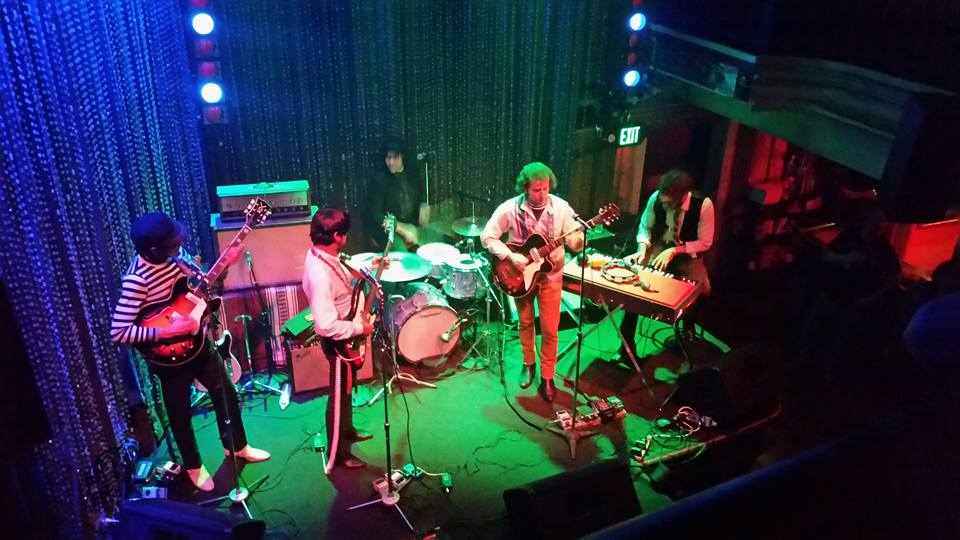
California band Creation Factory playing at Johnny Brenda's, May 16, 2017.

Intro, or: Why Am I Here?

Welcome to the Philly Spectacle! This blog is the gathering place for all of the Philadelphia area arts and entertainment stories written by Devin Marshall, a Philly transplant from Northern California. If you like reading about games, music (especially rock and electronica), art, conventions, DIY/independent projects and people who spend a great deal of time and energy creating things that they’re passionate about, then you’ve come to the right place. If you have a lead or topic that you think should be covered, please let me know in the comments or send your idea to devinthemarshall@gmail.com.

The stories posted here are the long-form versions (they usually get cut down for print). All photos posted are taken by Devin Marshall, unless otherwise credited. If an article was originally published elsewhere, expect a link at the top of the story to the first posting. (Image above: California band The Creation Factory playing at Johnny Brenda’s, May 16, 2017.)

Creating the Quest: Indie Level Design Tips from PAX Online

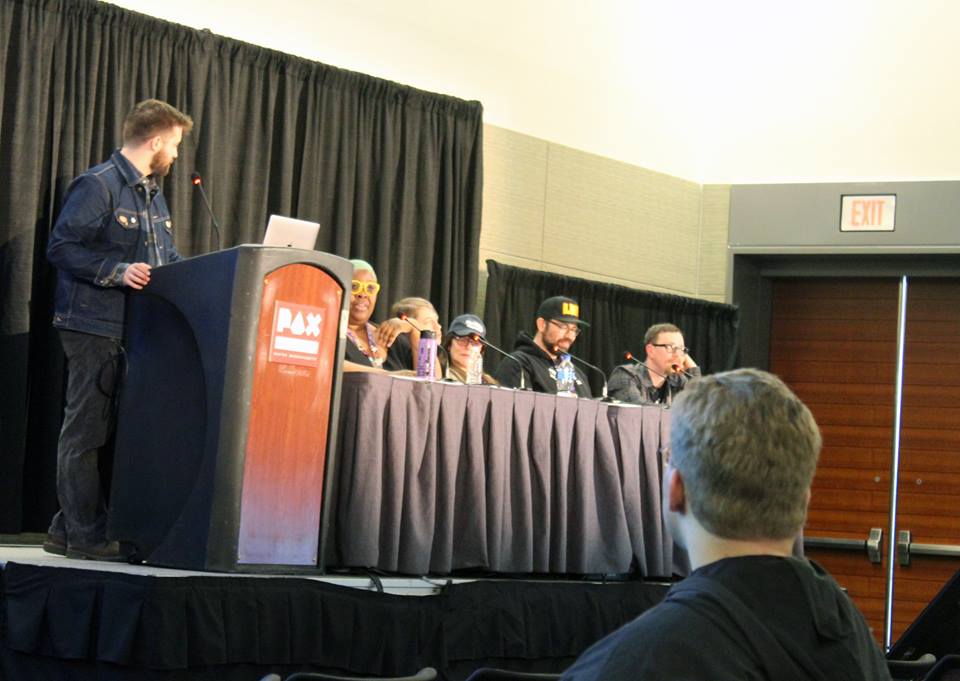
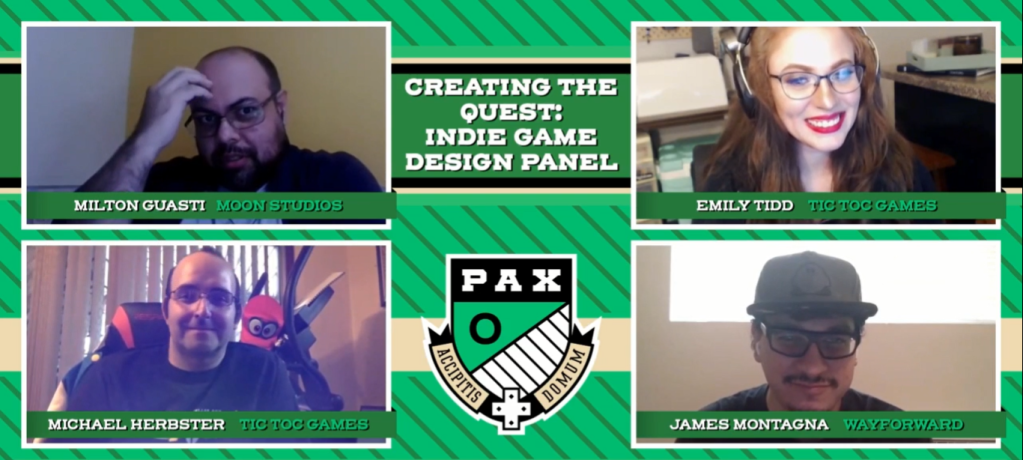
“Creating the Quest” presenters at PAX Online 2020.

You have to admit, 2020 has thrown the world at large for a bit of a loop. Saying this year has been a tad “odd” is an understatement. But we’re finding ways of adapting and chugging along.

You, the reader, may have transitioned from a brick and mortar office to your work-from-home lair, and become a modern vampire who hisses at the mere sight of light and the thought of people doing things outside. Or maybe you’ve just always been that way. Perhaps you are reading this in a hikikomori-like state, holed up in your comfy room with a blanket wrapped around you and infinite snacks at the ready, more than enough to survive whichever new doomsday twist might be around the corner as M. Night Shyamalan laughs in the distance. Weirder still, you could be…normal?

One saving grace of this year, arguably the best, is that games are still here to stay. (Thank goodness!) Whether you just play games or you make them too, this time of year tends to awaken a primal urge in many afflicted gamers: Go to Seattle, attend PAX West, and spend more money than you can rightfully justify.

Usually, tens of thousands of nerds descend upon the Penny Arcade Expo convention halls like a swarm of so many locusts, eager to check out new game company reveals, test out demos, stand awkwardly at the back of concerts featuring chiptunes, synth-pop or geek metal flair, and attend panels by industry experts in the hopes of gaining the knowledge that could help turn them into an industry expert themselves.

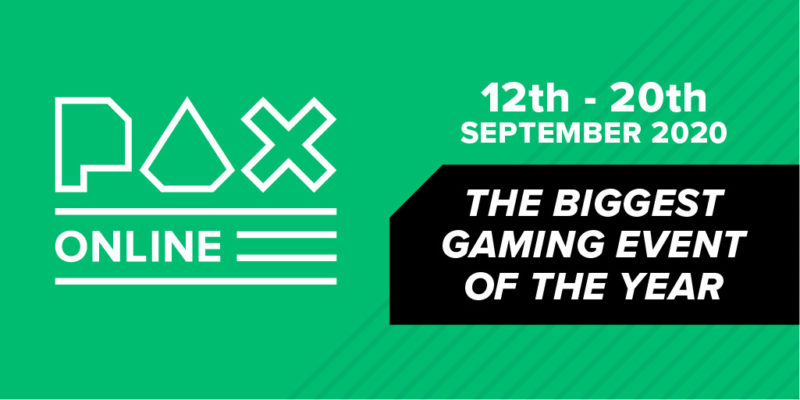
Thanks to that-which-shall-not-be-named, the Penny Arcade Expo is not a physical gathering this year, since the annual “con crud” this time around would turn the average post-gaming cold into a potential boss battle. But the organizers have worked tirelessly with the hand they were dealt, and thus PAX Online was born! Starting on September the 12th and running presently through to the 20th, panelists and musicians alike have worked with the convention hosts to give us that sweet gamer content around the clock, and for free at online.paxsite.com!

One of the intermission screens from PAX’s new virtual convention format.

One such offering is the “Creating the Quest” panel that aired on Wednesday, Sept. 16. Emily Tidd, host of the panel and Community Marketing Manager at Tic Toc Games, led the video conference attendees through a series of level design questions intended to give spectators a look at what goes on behind the scenes of game creation.

Indie game designers on the panel included WayForward Director James Montagna (Shantae, Mighty Switch Force!), Tic Toc Games Gameplay Director Michael Herbster (Shovel Knight, B.ARK) and Moon Studios Game Designer Milton Guasti (Ori and the Blind Forest, Project AM2R).

And so, here are a few tips for aspiring independent game designers on how to create levels that keep players wanting more.

Starting the Process

Michael:

  • Begin with a pen and paper to jot down your design ideas.
  • Build your level using documentation — what are the general emotions and feelings you wish the player to experience? What challenges with the player have to tackle in this level?
  • If the team approves of the level concept, the designer must “graybox” it out by turning their vision into a simple but playable model.
  • Make sure that someone else plays through it, that the level itself is playable from start to finish, and that enemies are in place. Art can be added afterward.

James:

  • When beginning the level design process for a new game, consider the game’s rules as well as the context for each level.
  • Learn the player’s navigation, such as how many units the character can jump vertically or horizontally. If any changes are made to the player’s design, it may invalidate the levels you built around it.
  • Think about which enemies will debut in each level, how they operate, and how how they will interact with the player on an individual basis.
  • Establish a debug or testing room to try out different things, such as testing different kinds of platforms and collision detection, as well as combat mechanics with each kind of enemy.
  • Establish a road map and think about where the level stands in regards to the rest of the game. Is your level early on, when the player is still learning the controls? Or have they unlocked all abilities and have every tool at their disposal?
  • “In a non-linear exploration game (such as a “Metroidvania”), knowing what tools and abilities [the player] has access to at all times is critical so that you can design around that.”

Adding Fun

Milton:

  • Create a player movement that feels smooth.
  • Where applicable, create a synergy between movement and combat.
  • Carefully craft different combinations of enemies to throw at the player.

Michael:

  • It’s important to make sure the player is challenged, but fairly challenged.
  • They should feel rewarded for getting through it.

James:

  • Orchestrate the experience so that the player feels empowered when you want them to feel that way.
  • In room-based games, don’t put an enemy in each one. Design the area with fun in mind and give the player a chance to rest.
  • Think about Mega Man, and the long empty hallways you travel through on your way to the boss.
  • “It’s important to let the player breathe and be in their head for a minute to stop and acknowledge the fun they’re having.”
  • Let the player have fun with new abilities they get, such as putting them in a room where they can try it out without taking damage.
  • Turn it into a teaching moment by making it so the player can’t leave the room until they use their ability successfully.

When your home has been your office for too long, you start to see things in your coffee.

Navigating Paths

Milton:

  • Add memorable visual landmarks so the player thinks “This particular place is important.” You can use markers like a huge entrance or a statue that stands out from the rest of the environment.
  • Give the player visual cues to consider so they’ll think to come back and explore later on in the game.
  • You can add small and unobtrusive nuances to get the player’s attention, such as panning the game’s camera to a specific point in the level, playing with a little splash of color, or adding something distinct to an object or place to make it pop or stand out somehow.

Michael:

  • Make sure that the art around the area is eye-catching, or add a sheen around things such as breakable objects.
  • You can play with light effects to give subtle hints to the player on where they should go without telling them. Add something like a gleam of light or a lamp over a door.
  • Make sure players aren’t drawn to areas that will get them killed.

James:

  • It’s not just about designing where you want the player to go — it’s also about not drawing their eye to where you don’t want them to go.
  • Different eras of gamers may interact with the game differently. “Oldschool gamers, it’s in their DNA to push through every wall to see if you can go through it.”

Narrative Flow

Milton:

  • Take world-building into consideration when designing each level or game. Be in touch with the concept artists about what the world looks like. Is there any civilization or technology? How complex is it? All natural?
  • If there are any NPC’s (non-playable characters) or inhabitants there, think about their small details. Each NPC has their own side story. “Even if it doesn’t explicitly contribute to the story, it makes the world feel more alive and alluring.”

Michael:

  • Make sure control isn’t taken away from the player unless there’s a major event.
  • Make sure everything feels fluid.
  • Check in with the game team to see that everyone is still holding hands and following the same vision.

James:

  • Designing levels driven by narrative gives us the opportunity to introduce a lot of personalities into a game.
  • Occasionally, the narrative can serve the purpose of introducing a level design concept. Specific details from the story can tee up events or challenges for the level designer. (Example: magic carpet race plotline in the story turning into a flying carpet challenge level)

Incorporating Color

Michael:

  • Make everything visually stunning.
  • Focus on putting characters against the background to see if they “pop” correctly.

James:

  • Use colors to set navigable paths, such as vibrant colors against a dark background.
  • Use colors to set different moods, such as yellow for alertness, or blue tones for calm.
  • Accent a special area with overall brighter colors, or effects like a colored tint over everything. The player can see that and sense that there’s a different energy in that area.

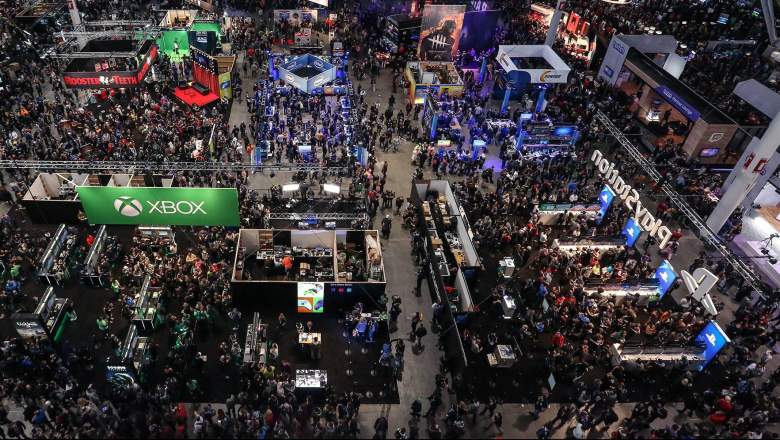
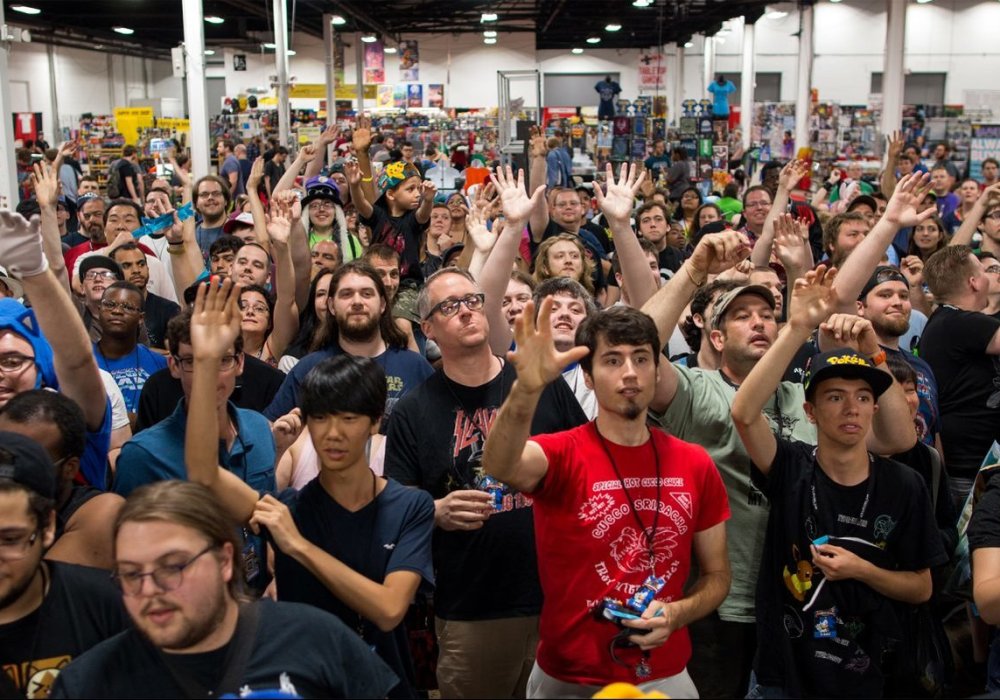
Remember when we could all cram into game conventions like a can of sardines? (Credit: https://blog-ambassadors.xbox.com/)

Measuring Success

Milton:

  • Observe playtesters in their natural habitat, from a distance. The more you interfere, the more you tamper with the results. Otherwise, “The moment they do something you don’t want them to do, you’ll say ‘Oh no! Don’t go there! That’s not how it’s supposed to work!'”
  • Testers will find issues you don’t see because you’re too close to them.
  • Once enough testing is conducted, you’ll start to see patterns where there are spikes in difficulty. You can use this data to tweak the player experience.
  • “The sooner you get the opinion of other people, the cheaper the changes will be later on.”

Michael:

  • Just get your game in the hands of players. Keep your mouth shut, and watch what they’re doing.
  • Ask the players specific questions. If it leads in the wrong direction, you’ll get bad information. Asking “How did you feel about that?” may be too open-ended, but you could ask something like “Was that section hard?” and turn it into useful information and concentrated feedback.
  • Find testers with different play styles, including novices and those who don’t consider themselves a hardcore gamer. You can study how they play your game compared to other players.

James:

  • It may sound cheesy, but you can conduct a “Smile Test” to see if a player is smiling or nodding and having fun while playing your game for the first time.
  • The whole reason games exist is to produce positive reactions and to have fun.

Replay Value

Milton:

  • Some fun concepts include things like exploring to fill out a player’s map, or gaining new abilities and then using them to unlock things.
  • If possible, add things like speed trials so players can show off their competitive edge.

Michael:

  • Add a high score system. Players will be able to track how they’ve improved, or how many enemies they’ve downed.

James:

  • Aim for making an experience so fun that players just wanna do it again and again. You can do things like hide treats, which encourages players to go back into a stage and search every nook and cranny to collect them all.
  • Craft puzzles so that players want to go back and try again to get a better clear time.
  • Put something in an earlier stage that seeds a future event.

If you would like to learn more about the panelists and their work, feel free to give them a follow on Twitter!

@LadyAvianna [Community Marketing Manager, Tic Toc Games], @MichaelHerbStar [Director of Gameplay, Tic Toc Games], @JamesPopStar [Game Designer and Director, WayForward], @DoctorM64 [Game Designer, Moon Studios]

Or, follow PAX itself, @PAX!

Visit now at online.paxsite.com!

Promoting your indie game: Advice from PAX East 2019

Penny Arcade Expo East took place on the weekend of March 28th-31st in Boston, MA, and tens of thousands of people (including this Philly-based writer) descended upon the convention center, eager to glean info on new games to hit the scene. Some of those convention-goers attended panels to learn how to become game designers themselves, or improve games they’re already making.

One such panel was “Promote Your Indie Game Like a Damn Professional”, featuring panelists Tom Dyke (Events Director for Cards Against Humanity), Shari Spiro (Owner of Breaking Games), Maya Coleman (Community Manager of Secret Hitler), Jon Ritter (Owner of Lay Waste Games), Luke Crane (Creator of Burning Wheel), and Tanya X. Short (Captain of Kitfox Games). The Thursday afternoon talk was full of people enthusiastic about creating PC and tabletop games alike.

Here are a few tips that the presenters gave for marketing your indie game, from development to post-shipping.

  • For better playtest feedback: Ask pointed questions about certain elements of your game, rather than just asking “Did you have fun?” That way you will get more specific suggestions than just a “yes” or “no” answer.
  • Have non-friends playtest your game. This means that they won’t be biased toward saying that your game is better than it really is. Also, don’t let them know you’re the designer, because that will most likely cause them to act nicer and not give genuine feedback.
  • Sit down and play your game with people first before taking it to social media. This way, you can avoid any big pitfalls by discovering large errors in person instead of having to fix embarrassing issues right after announcing it.

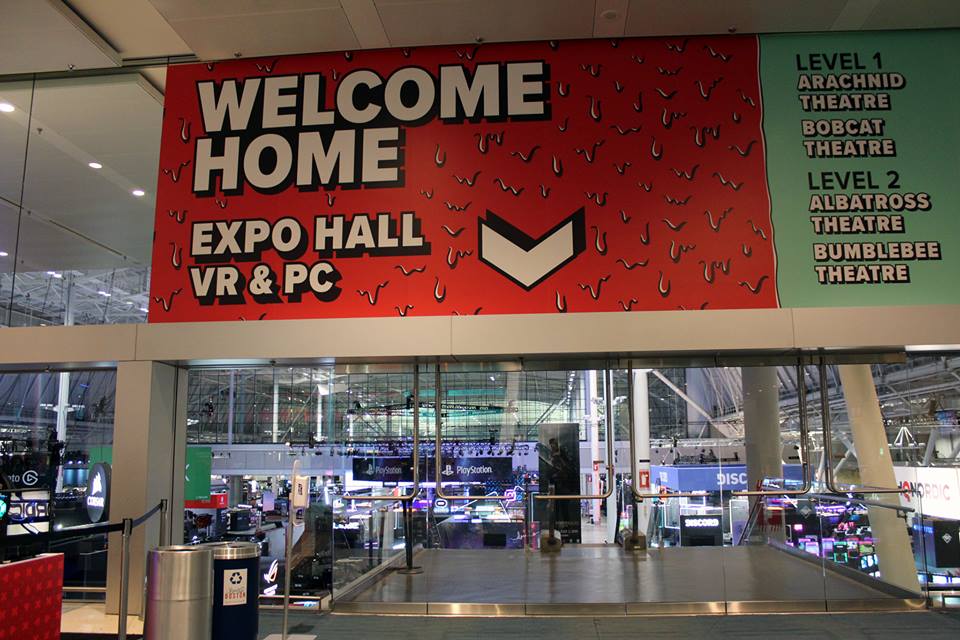
WelcomeHome

When you know you’re back home.

Tabletop Playtesting:

  • Do around 200 playtests from other people before finalizing your game. Hand over the rules and the game, and then step back. Bite your tongue. It will be difficult to watch people making mistakes during your game (maybe from the very beginning), but it is very important to see where they get confused so you can clear those issues up before production.
  • You can make cheap prototypes of your game by printing and taping paper over pre-existing cards or other pieces that you own.
  • Print + play – You can make printable templates to send online to people who pre-order or back your game on Kickstarter, so they can play at home while they wait for the game to publish.
  • Friendly local game store and game night meetups – See where people congregate to play games with each other. You can take your game to these enthusiastic groups and ask them to test out your game and give you feedback afterward.
  • If you are getting testers’ feedback digitally – After people test the software, if possible, move them to a different computer to fill out your survey or test. Studies show that players will act nicer on the same computer they played a game on, which skews the results.
  • Send your game to a group of 3 people at one time. Any more than that will be too redundant, and you’ll start to get repeated feedback.
  • You can reach out to your Kickstarter/other funding campaign backers and ask them to be playtesters. Send them a special alpha version and ask for feedback. It brings the community together, and makes them feel special and more invested in your game.

Community Management:

  • There is a lot of value in creating a community. It makes the game “evergreen” – it keeps it going all year round.
  • Put yourself out there. Keep yourself accessible in some way. Fans are excited to talk to you! Be ready to shape that community. Even if you are tired of talking about yourself and your story, new people haven’t heard it yet.
  • “Creep” around. Find places where people are talking about your game, and see what they have to say. Learn what their issues with your game are, and find out what you’re doing right.
  • You. Must. Be. Yourself.
  • If someone is angry about your game: “The reason they’re mad is because they care.”
  • Put effort in to rectify problems with your game. Even if you don’t fix the problem, the fact that you tried is important.
  • Discord is a free, good resource for building community.
  • Be available in many places online, and see where the most people gather.


And most of all, have fun!

Black Ops 4 sweepstakes gives early look at new game

Fans of the Call of Duty game franchise have a chance to play the yet-to-be-released “Call of Duty: Black Ops 4” in person next week.

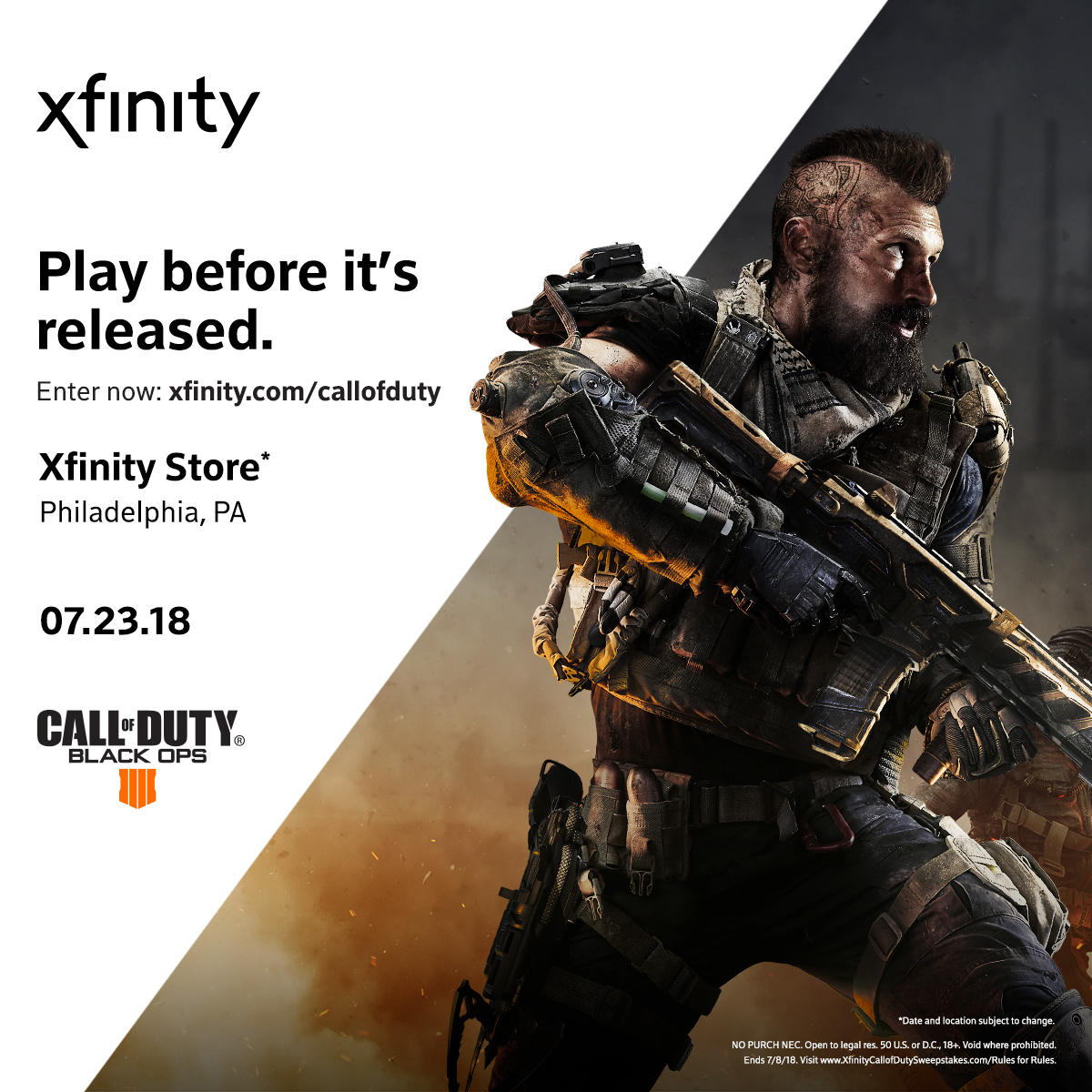
In a partnership between Comcast Xfinity and Activision, the companies launched a sweepstakes this summer across eight U.S. cities to play the game months before it officially releases on October 12th.

50 lucky winners from the Philadelphia area will get chosen to play Black Ops 4 at the King of Prussia Xfinity store this Monday, July 23rd. You can enter the sweepstakes at https://www.xfinity.com/CallofDuty. The game is part of a first-person shooter series featuring war zone combat across different time periods.

1

“It’s not just about playing the game, it’s the full experience,” said Mark Cruz, senior manager of partnership marketing on the Xfinity brand team. “Activision is bringing the full setup like the reveal event in Los Angeles. For fans who couldn’t make it to that or E3, this is a chance to get hands on with their friends…Winners of the sweepstakes can bring a friend and share the experience with them.”

In addition to this sneak peek of the upcoming game, there will be exclusive giveaways and photo opportunities. “It’s really a great way for Xfinity to bring the new Call Of Duty to the fans,” Cruz said.

Black Ops 4 will include Multiplayer mode, Zombies mode, and the new Blackout mode, which features a survival battle royale style of play on the biggest map in CoD history. Zombies includes three separate campaigns at this time, called “Voyage of Despair,” “IX” and “Blood of the Dead.”

The newest game in the series is the first to not include a single-player campaign mode. However, Multiplayer mode does include skill-based Solo Missions, which take place chronologically between the events of the games Black Ops 2 and Black Ops 3.

3

In the coming weeks, Activision will announce special dates on which Xfinity customers can play in the beta version of the game for free.

Call of Duty: Black Ops 4 will be released for PlayStation 4, Xbox One and PC. For more information on the game and to watch trailers, visit https://www.callofduty.com/blackops4.


Win $5,000 playing Overwatch at the TooManyGames convention

As seen on Philly.com


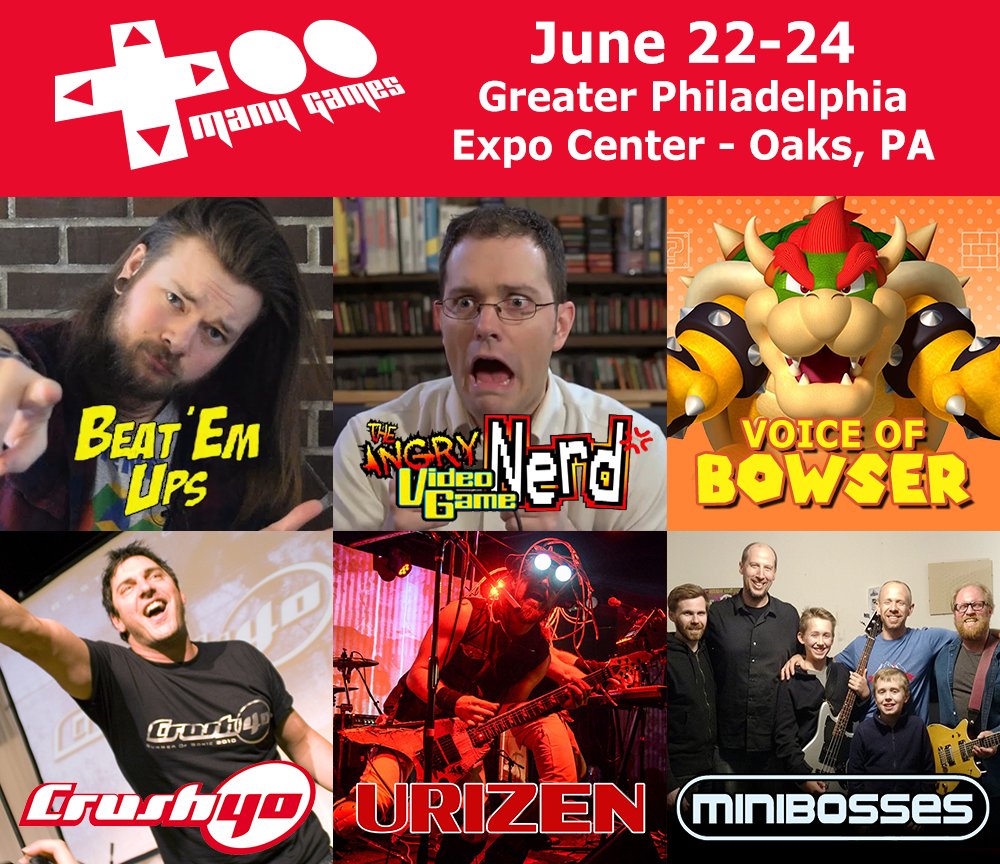
TooManyGames is back at the Greater Philadelphia Expo Center this weekend with free-to-play arcade games, internet celebrities, tournaments, concerts, industry panel discussions, cosplay, wrestling, and vendors. What first started as a small retro gaming marketplace has expanded into an impressive convention full of activities and guest speakers.

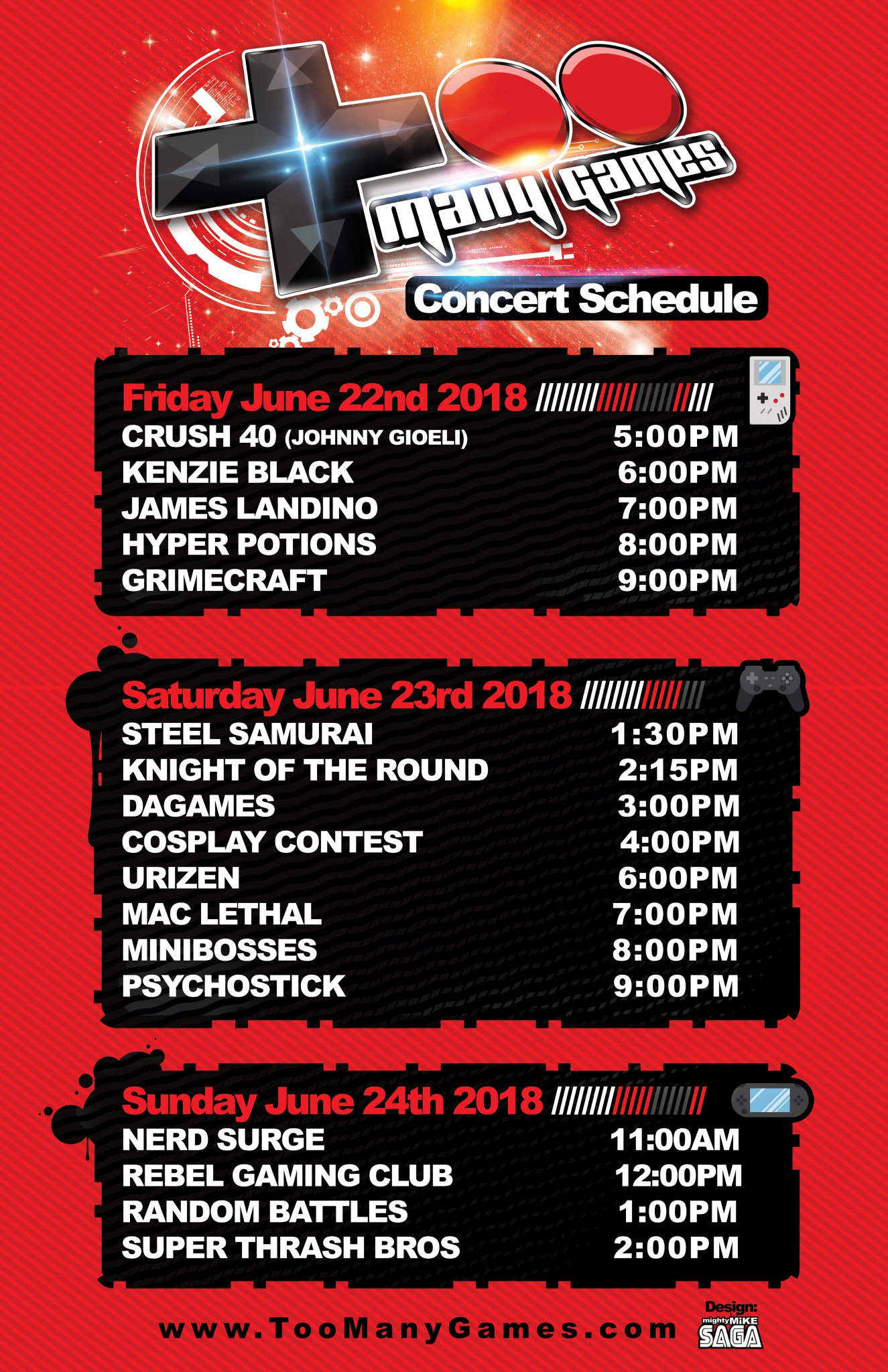
Some of the more well-known guests this year include Philly resident and video-game reviewer James Rolfe (aka the Angry Video Game Nerd), Twitch streamer “Vinny” Vinesauce, and voice actors Charles Martinet and Kenny James, who are behind the famous Nintendo characters Mario and Bowser. You can also see live performances from the Minibosses, GRIMECRAFT, Super Thrash Bros., and more.

Guests

All photos are courtesy TMG’s Twitter page at https://twitter.com/TooManyGames.

The newest big draw? An esports tournament with a $5,000 prize pot.

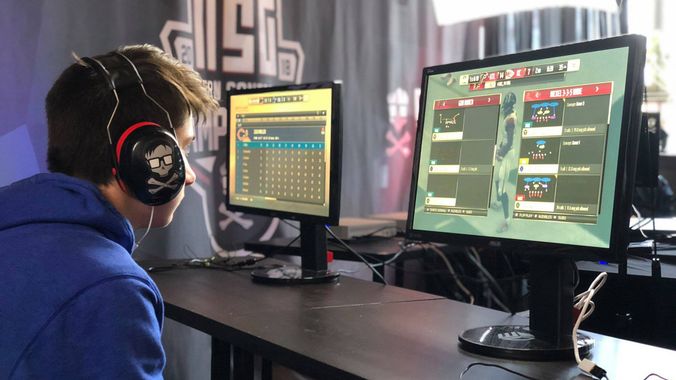
In the inaugural Fusion Showcase Overwatch esports tournament, up to 16 teams of six players each will meet up and clash on computer screens. The competition is the first amateur game tournament in the Philadelphia area officially licensed by Overwatch creator Blizzard Entertainment. As of press time, there were still spots available for teams.


FreeplayGames

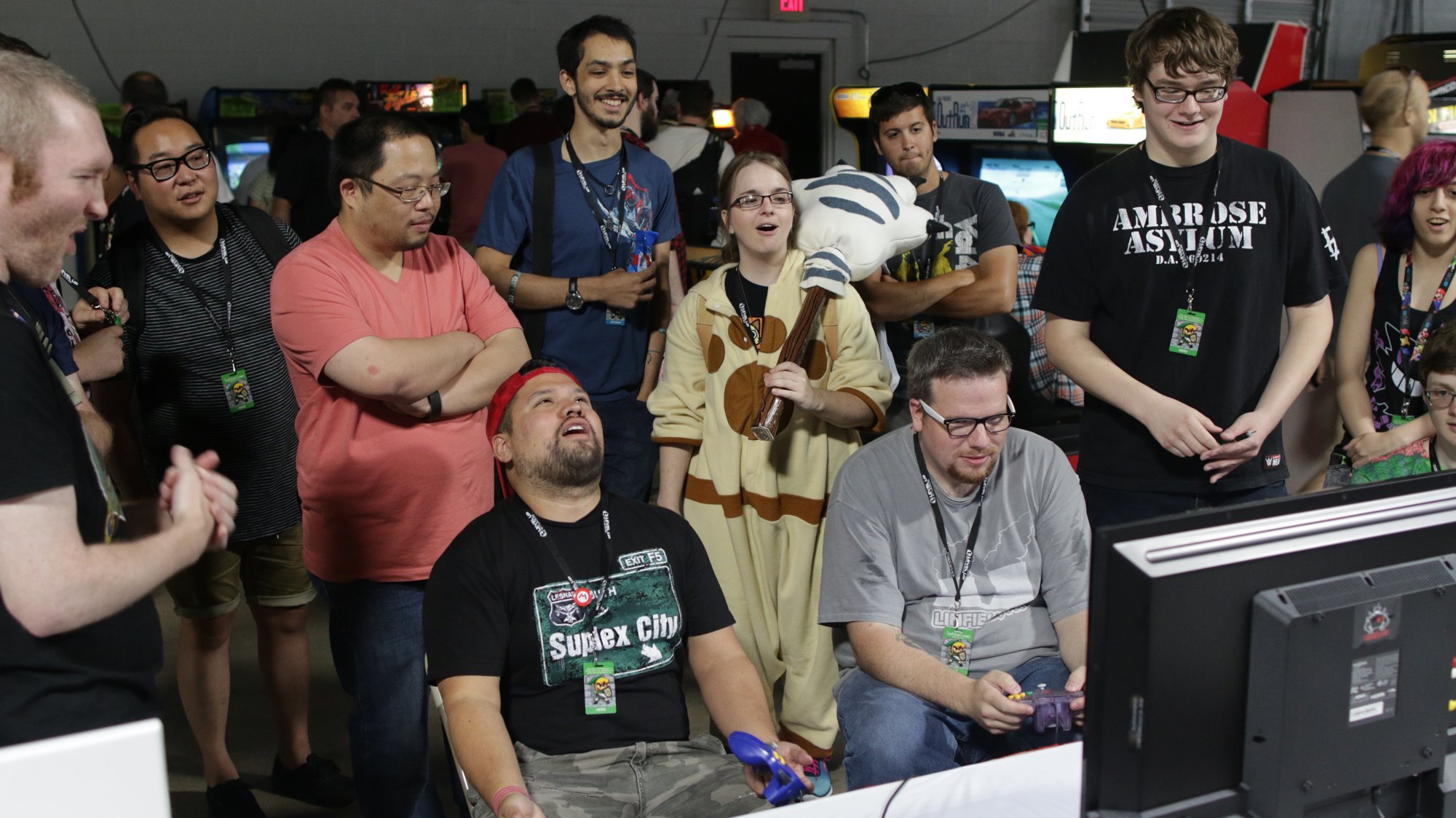
Free-play games at the TMG convention in 2017.

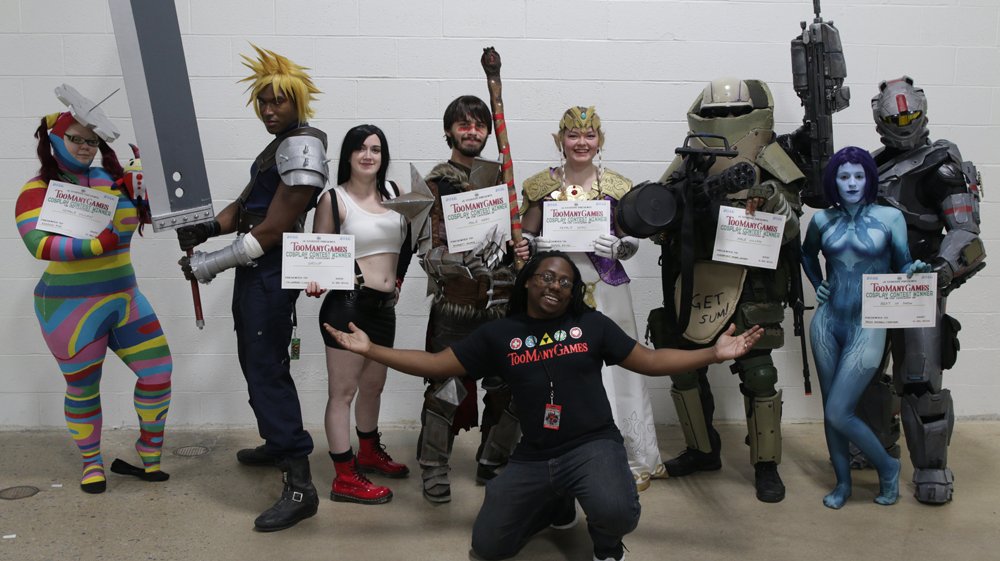
“I honestly just really like bringing all different types of gamers together into one place,” said Paul Truitt, who runs the convention with Ryan Schott. “I myself am very into retro gaming and puzzle games, and Ryan’s into esports. We bring all the music and the cosplaying, just bringing all the different types of nerds, basically, into one place is really the main focus and reason that we do it.”


CosplayWrestling

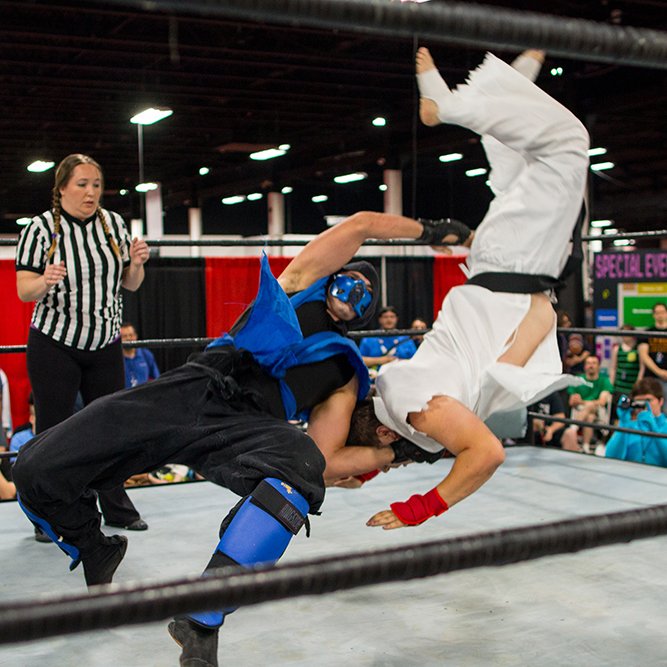
Cosplay wrestling at the TMG convention in 2017.

The two work with local charities and organizations to run the show, including Philadelphia’s own J1-Con Anime & Gaming Expo to run the cosplay contest; Nerdvana Games and Comics from Egg Harbor Township, N.J., to run the tabletop gaming events; hunger relief organization Philabundance; ExtraLife, which works with the Children’s Miracle Network Hospitals to provide games to kids in hospitals; and Operation Supply Drop, which sends supplies to American troops overseas. “All of our volunteers are, for the most part, local people,” Truitt said.

Schott is the president of Screenwave Media, a Philadelphia-based company that represents more than 800 video game talents on YouTube and Twitch. “TooManyGames was becoming a bigger and bigger event in Philadelphia, and I decided that I would invest in it,” Schott said, who organized the Overwatch tournament with N3rd Street Gamers.

ConcertSchedule

This year’s TMG concert schedule for 2018.

TooManyGames’ annual Smash Bros. game tournament, Smashadelphia, had more than 400 competitors last year. “It was about being involved with the city, having people with an interest in Philadelphia and Philadelphia gaming, participate in the tournament,” Schott said. This year, Smashadelphia offers a total of $2,500 in tournament winnings. “We’re continuing what we do with Smashadelphia into Overwatch … There are a lot of skilled players that are trying to show that they have what it takes to go to that next level, and I think this is the tournament for them,” Schott said. Other tournaments include Settlers of Catan, Hearthstone and Dragonball FighterZ.

“I have to say, I’m very excited for esports to become a key part of the TooManyGames convention as it continues to evolve as an event that started as a marketplace for retro video games,” Schott said. “It has become a place where gamers of all ages and skill levels could get together to play. I think that the Overwatch event is going to be gigantic. It’s going to be a spectacle, [even] just from the production standpoint. I think most gamers haven’t played on a 60-foot stage.”

CosplayContest

The J1-Con event organizer helps run TMG’s cosplay contest.


Register your team for the Overwatch Tournament over at https://www.lobby.gg/event/fusion-showcase. For more TMG info and tickets, visit https://toomanygames.com.

PLAY THIS

TooManyGames

Friday-Sunday, Greater Philadelphia Expo Center, 100 Station Ave., Oaks, Pa., $25-$120, toomanygames.com

Philly investors think online gaming is an opportunity ‘screaming from the roof’

As seen on Billy Penn

Who cares about esports? You might be surprised.


The idea of esports might conjure the stereotypical image of a lonely nerd sitting at the computer in his mother’s basement, but these days, competitive online gaming is a hot market.

An esports athlete can net $50,000 a year plus benefits — and that’s just the starting pay in the Overwatch League. The cap for a high-performing player is somewhere in the millions. The esports industry made $655 million in revenue in 2017, according to a Newzoo report. This year, it’s expected to surpass an impressive $900 million.

No surprise, then, that Philly sports, entertainment and venture capital companies are scrambling to be part of the digital gold rush.

Harris Blitzer Sports & Entertainment, which owns the Sixers, jumped into the market and made history in September 2016 when it acquired Team Dignitas, an internationally-known esports team from the United Kingdom.


76ers

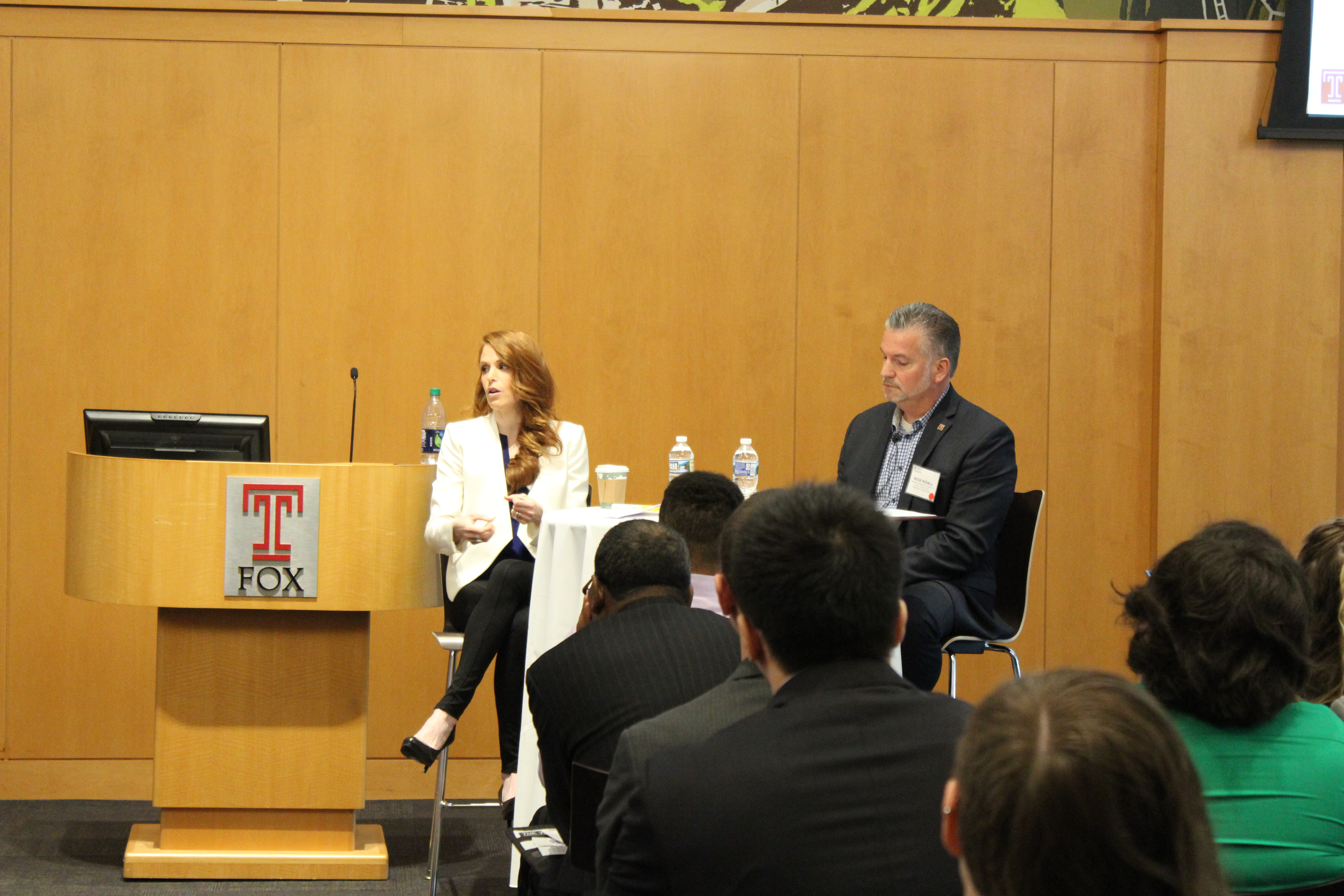
Lara Toscami Weems of Sixers owner Harris Blitzer explains why the company got into esports at Temple’s panel.

“You hear these incredible stats about esports…it became a race,” said Lara Toscani Weems, communications director with Harris Blitzer, at an esports symposium at Temple at the end of April. “We wanted a team that felt like the 76ers…We’re looking for places where there’s opportunity for growth.”

Currently, Dignitas plays seven different games competitively, including first-person shooter Counter-Strike: Global Offensive. The challenge so far is marketing them without shoving it in people’s faces.

“We are mindful of the 76er audiences, we’ll find a creative way…We’re aware that the audiences are different,” she said. Asked what the next big game will be, Weems had a ready answer: “Everyone’s talking about Fortnite right now.” Recording artist Drake recently made headlines playing Fortnite with one of the game’s most popular streamers.

Meanwhile, Comcast Spectacor, owner of the Flyers, also owns the Philadelphia Fusion, an Overwatch team currently competing at the Blizzard Arena in Burbank, CA. Since they play far away, there are official viewing parties in Philly to drum up hometown support. “We need these local events, our boots on the ground,” said Joe Marsh, Fusion’s finance director.

Plans are in the works to build a home arena, possibly in University City or Northern Liberties.

“We’re mapping out where our fans are,” Marsh said. “We’ve seen our following grow because we’re from Philadelphia, they don’t want to cheer for New York.”

The Union, Philly’s pro soccer team, also participates in esports via eMLS, a competition in the FIFA Global Series. This March, the Union hosted the eSports Open Tournament and signed the winner, 17-year-old Cormac Dooley, to compete at the eMLS Cup at PAX East in Boston.

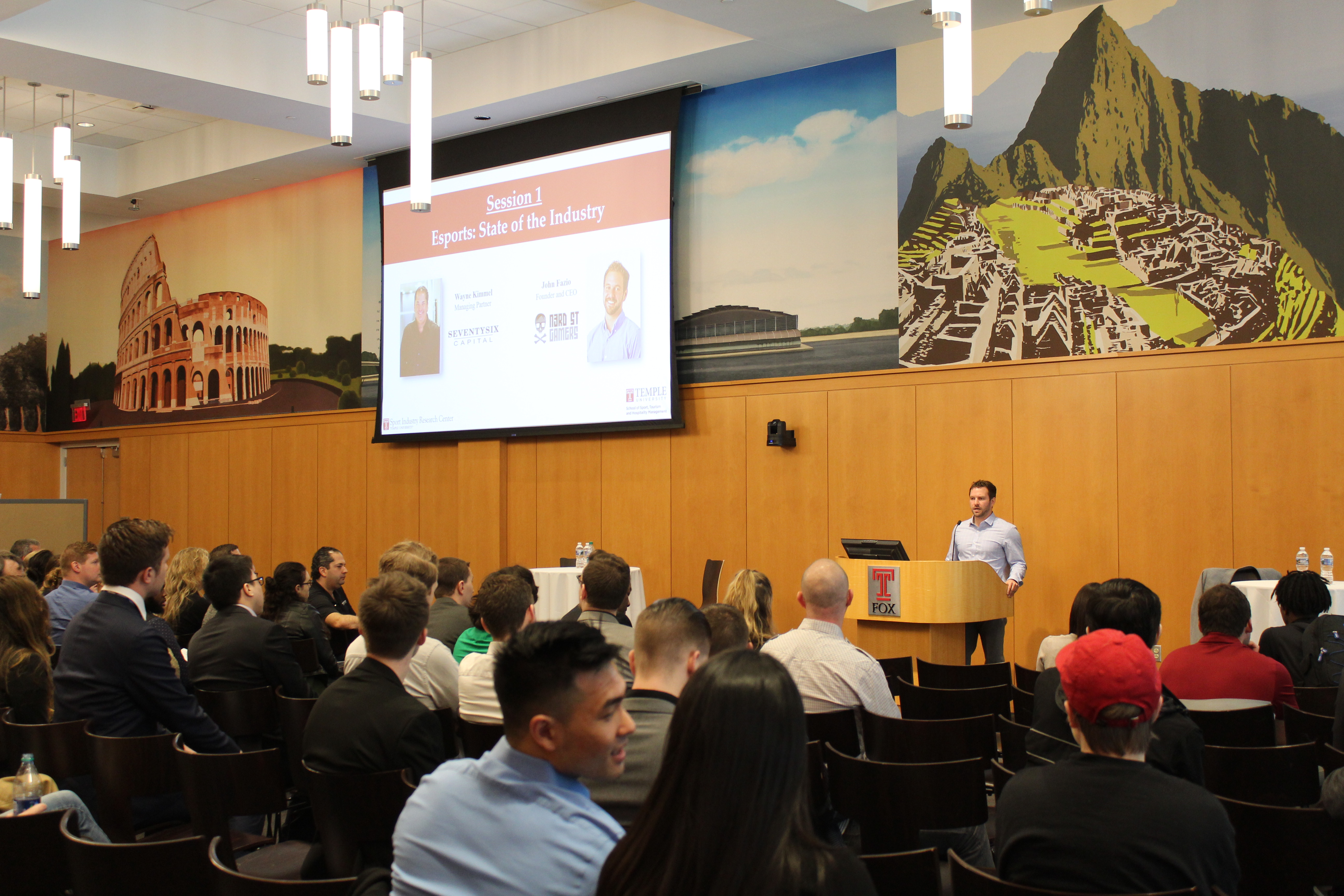
N3rd Street Gamers, based in Old City, hosts game tournaments and sponsors local esports events, like next month’s Fusion Showcase Overwatch tournament at the TooManyGames convention. The prize pot is a sweet $5,000. “I’m really excited for what’s to come,” said CEO John Fazio. “I think we forget how really underdeveloped this industry is.”

Fazio

N3rd Street Gamers CEO John Fazio discusses esports on the local level at Temple.

Equipment cost is one barrier for prospective gamers.

“To play football, you walk outside and throw a football,” Fazio said. “To play esports, you buy a computer, or you buy a console.” A player also needs a fast internet connection — and eventually, sponsorships. To join the Overwatch League alone, signing a team costs an alleged $20 million.

Wayne Kimmel, managing director of VC firm SeventySix Capital, invested in N3rd Street Gamers after seeing the potential for this new industry.

“We think this esports world is the next, next thing…We’re thrilled to be investors,” he said. “The opportunity is just screaming from the roof. We gotta bring people out, see [gamers] playing, yelling, hugging each other after the match. People need to see these things with their own two eyes, it’s incredible.”

The Fusion, Philly’s hot new esports team, can’t wait to play in its home city

As seen on Billy Penn


The Comcast-owned Overwatch League team is currently based in California

Philly’s newest sports team has it all – experienced coaches, devoted fans, and lively commentators watching their every move on live broadcasts. Watch for just a moment, and you’ll soon realize it’s way more extreme than other sports you’re used to: Explosions, giant mech suits and aerial fights abound. Though it sounds exceedingly dangerous, each match takes place on a screen far detached from reality. Also, the winning team takes home a million dollars. Welcome to esports!

The Philadelphia Fusion is an international esports team made up of 12 people who share the same passion: Playing Overwatch. Overwatch is a team-based, online shooting game for the PC, PlayStation 4 and the Xbox One, where the main concept is generally pretty simple – two teams of six fight to capture a control point and keep the other team from taking it back, or defend and escort the “payload” such as a truck carrying goods from one side of the playfield to the other while fending off attackers. If you have played the ever-popular Team Fortress 2, this will all sound quite familiar to you.

Despite the simple objective, there are infinite levels of complexity involved. There are more than 20 “maps,” or playing fields, to compete on with different elevations, scenery, chokepoints and hiding spots. Players select a “hero” from a roster of 26 different characters separated into four distinct roles, like healing damage done to teammates or attacking on the front lines. Each hero has their own unique abilities, weaponry and playing style – so with every combination of heroes selected on a six-player team, players must adapt to changing environments, enemy team rosters and making sure their own team is well balanced.

You might think it’s silly, but 10 million viewers tuned in to watch the first week’s matches alone. The team is owned by Comcast Spectacor, who also own the Flyers – the teams even share the black and orange uniform colors. The team’s president is Tucker Roberts, son of Comcast CEO Brian Roberts. Comcast chose Wahoo’s in University City to host the first official watching party of Fusion’s first match on stage against the Houston Outlaws on Jan. 11th, and hundreds of people showed up thanks to the spread of social media marketing and word of mouth.
fans

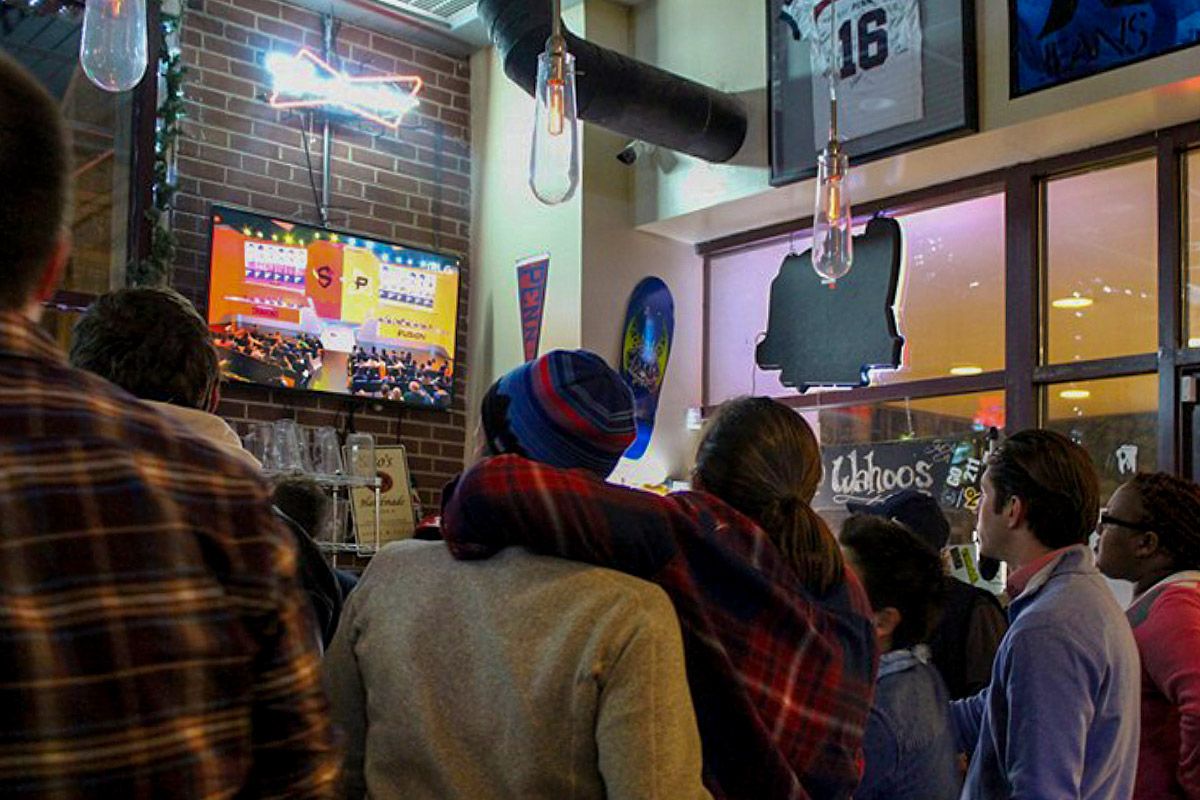
Spectators watch the Fusion play against the Shanghai Dragons in their Jan. 26 match at Wahoo’s.

“You would have thought you were watching the Superbowl, because the way the people were reacting, when Fusion got a kill…it was crazy,” said Sean Rinko, a manager at Wahoo’s. Since then, Wahoo’s has hosted live streams of each Philadelphia Fusion match.

“That Thursday was our biggest turnout – we had tents up on our patio, so we were at max capacity. We actually had to stop letting people in,” Rinko said. “It’s kind of like any other sporting event, you know, like if there’s a soccer game on, we have a lot of people come watch soccer. So it’s all just kind of part of the vibe we have going here. It’s nice and it’s fun, and most of the regulars, well at first they were like ‘What are you watching, video games?’ And after they watched a little bit and they found out, hey, this is Philly’s team, (their attitude) definitely changed.”

The Fusion team competes twice a week in the Overwatch League, now in its inaugural season. The 12 OWL teams are named after different regions and divided into the Pacific and the Atlantic divisions, but they all currently play out of the Blizzard Esports Arena in Burbank, CA.

Soon, the plan is to move the teams to local home arenas for each region. “There are plans to move to Philly, but the timing is dependent on so many factors,” head coach Yann “Kirby” Luu wrote in an email interview. “We are excited for the future and can’t wait to get to Philly. We have already seen the passion the fans have for esports. Even though we represent the city of Philadelphia, I’ve yet to go there myself, so really it’s the entire idea of being there, close to the local Fusion fans, that I’m excited about.  Philly has the best fans in all of sports.”
strategy

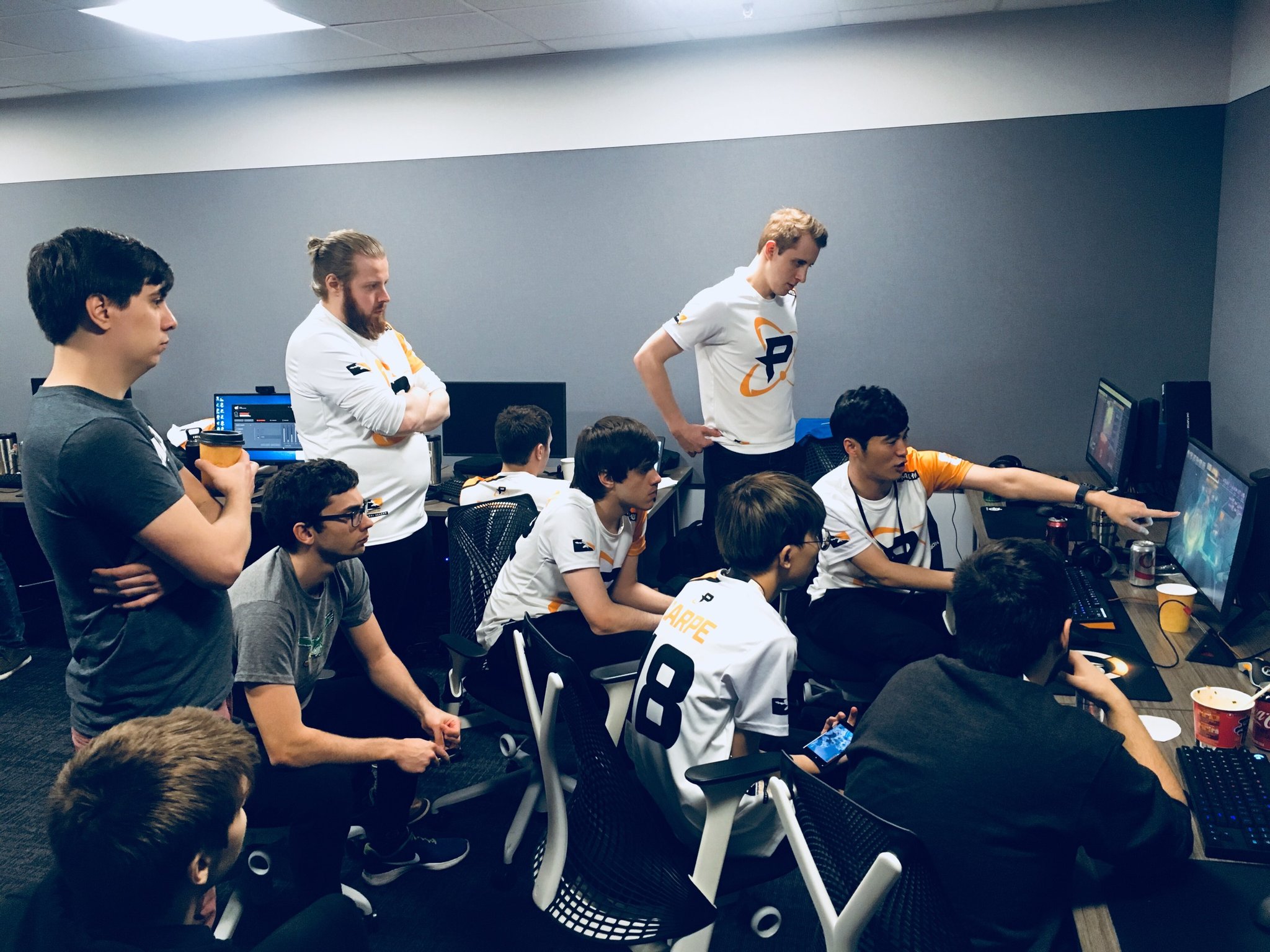
The Fusion work on their play strategy. (@PHL_Fusion on Twitter)

Luu and assistant coaches Se-Hwi “NamedHwi” Go and Elliot Hayes advise the Philadelphia Fusion team between matches. Their diverse roster boasts four members from South Korea, and one member each from Finland, Russia, Canada, Spain, France, Israel, Sweden and the U.K.

“We went through a very extensive trial process in all three major regions (North America, Europe, and Korea) to find the best available players, but also players that we thought would work well together, and make the best possible team,” Luu wrote. Despite the geographical differences, the players communicate in a common language. “Even though we have players from many different countries, all of the European players are used to playing with people from different nationalities, and therefore communicating in English. So the challenge is more about bridging the gap between our Korean and Western players, which we’re trying to achieve by also having a multicultural coaching staff, and providing English tutoring to those who need it.”

Philly Fusion player Gael “Poko” Gouzerch from Nîmes, France is known for skillfully deploying his “ult,” or ultimate move, as the character D.Va. He’s caught the world by storm with his flashy self-destruct move, to the point where several articles have gone in-depth to study his technique and have renamed the move the “Poko Bomb.” Of course, watching players compete on the big stage for huge sums of money, like him, is enticing to anyone with a copy of the game.

FusionVersusSFShockFromTwitter

The Fusion walk up to play against the San Francisco Shock in Burbank. (Twitter)

To become a pro gamer, it takes “a lot of sacrifices and dedication – sometimes your friends are gonna ask you to party Sunday night but you have scrims (practice matches) so you can’t,” Gouzerch wrote in an email interview. “You have to be able to put your friends and family on hold to be the best. I started by playing with friends of mine at Overwatch and I was spotted thanks to my good performance in tournaments. My daily life hasn’t changed that much because I still have to wake up, practice, eat, practice and sleep but now it’s in LA. We compete every week on the sickest stage and we are paid a lot.”

“Poko” is happy to know about local support for the Fusion here. “We didn’t expect so much support from Philly fans, we are very proud to represent such a beautiful city and we are gonna do our best to make them proud,” he wrote. “It’s not up to me, but if I had to decide I would definitely go to Philly sooner. I’ve heard they have some amazing cheesesteaks, and the Eagles are the dream squad.”

Jun Hwuy An, a sophomore at UPenn, is studying for his BA at the Wharton School of Business and LALS at the College of Arts and Sciences. He’s also the Overwatch Liaison chair at the University of Pennsylvania eSports Association, an organization with 220 active members that started in Sept. 2016. Along with his friend and Events Chair, Ryan Nguyen, they create esports events for interested UPenn students and help coach the competitive team.

“I have watched all the games thus far, and I think Philly Fusion is doing pretty good in their games,” An wrote in an email interview. “The one critique I have is their energy – when they win, they are energized and more focused, but once losses hit them, they seem to get sluggish, slow down, and fall apart. This was crucial during their nail-biting match against the LA Gladiators. I do not think they should have been reverse-swept at all; in fact, they should have carried their momentum and destroyed the Gladiators in the third match. Use that energy, boys.”

Some criticize esports for being all-digital. “Esports is essentially like traditional sports, sans the physicality of it,” An wrote. “Both commit a tremendous time and effort to mastering their craft and they sacrifice a bit of their wellbeing for what they love. Esports players practice, they utilize teamwork and incredible player skill to win games, and they must be examples of good citizens for their viewers. Of course, esports has blown up recently thanks to the likes of Overwatch, but again, it is still a sport that in its essence, it accumulates all of the features of sports and sporty behavior. One thing that’s cool about esports, however, is that most viewers of esports play the game while most people who watch football, for example, don’t play football.”
fusion

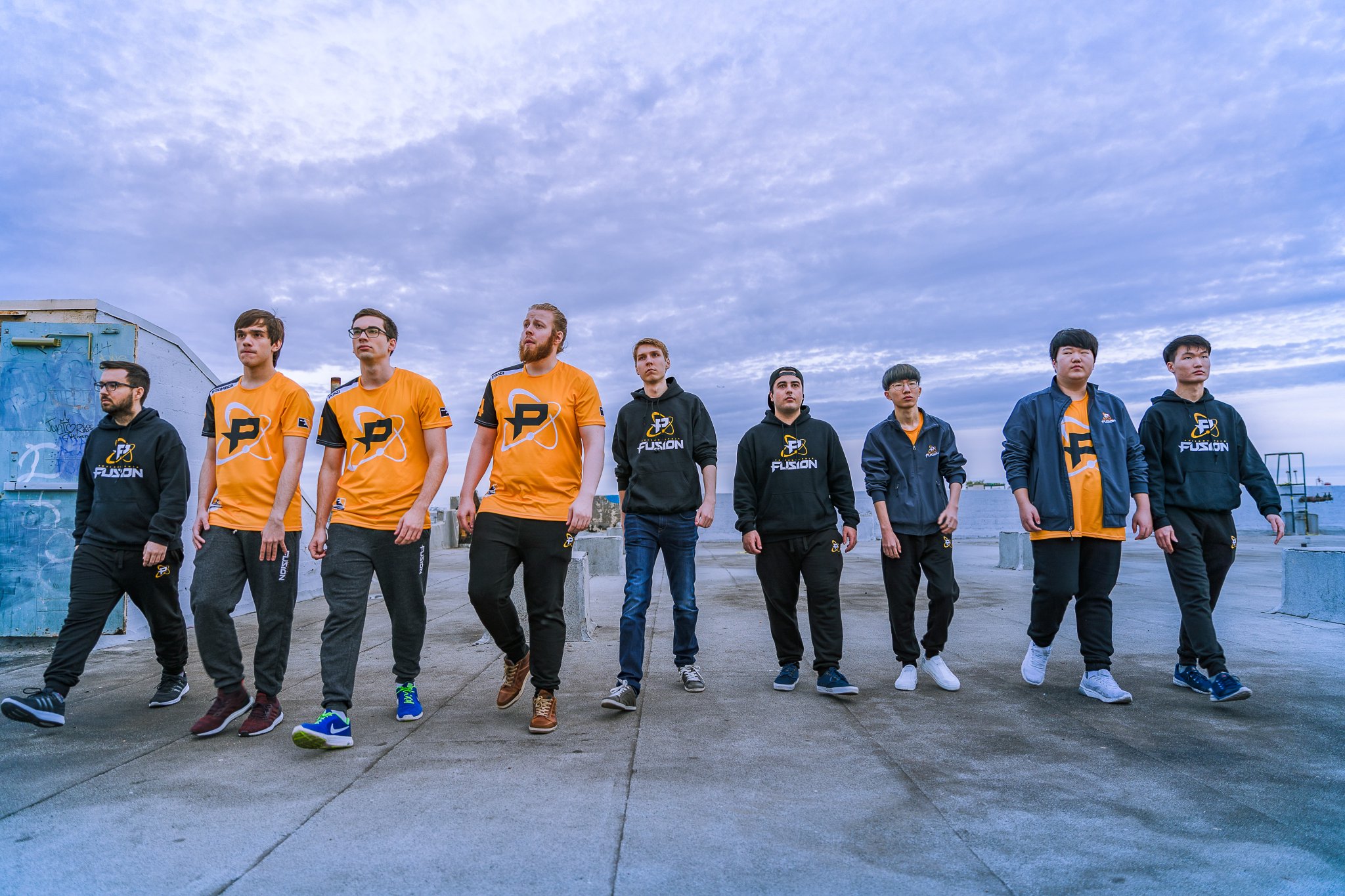
The Fusion pose for their promo photo (overwatchleague.com).

The Fusion will compete throughout all four stages of Season 1 until it ends June 16th and the highest-performing teams will be announced to play the title matches. Two players are currently on the bench: Simon “snillo” Ekström will begin play in March when he is old enough to legally compete at age 18. Su-Min “SADO” Kim, who was fined and suspended for an account boosting infraction, won’t be competing until Stage 4 in May.

Fusion suffered a particularly tough loss to the LA Gladiators after they were initially up by two points in their Jan. 18 match. “We’re a bit disappointed about our loss versus the Gladiators because we feel like we should’ve been able to close that game since we were up 2-0, but the Gladiators punished our mistakes and came back,” Luu said. “Overall we’re not completely satisfied, since we think we have a pretty high skill ceiling with this roster, but considering our bumpy pre-season, we’re not in too bad a spot.” Luckily, the Fusion came back after that with a 3-2 win in their Jan. 25 game against New York Excelsior, marking New York’s first loss in the league to date.


Stage 1 matches have concluded with Fusion’s 6 match wins versus 4 losses. The Philadelphia Fusion face off against the Boston Uprising in their first match of Stage 2 Feb. 22 at 9 p.m. Watch live online at overwatchleague.com or twitch.tv/overwatchleague, or head over to Wahoo’s at 3180 Chestnut St. to watch among fans.
PAX Unplugged celebrates gaming’s inclusive future

As seen on Technical.ly Philly

The Pennsylvania Convention Center featured tabletop games galore last month — and, more importantly, players of all stripes.


Dragons and castles, sinking battleships and miniature Space Marines. What do they all have in common? A table, some pieces and people who love interactive storytelling.

Tabletop games took the main stage at the inaugural PAX Unplugged convention, including board games, card games and roleplaying games like Dungeons & Dragons. The event took place at the Pennsylvania Convention Center in Philadelphia last month.
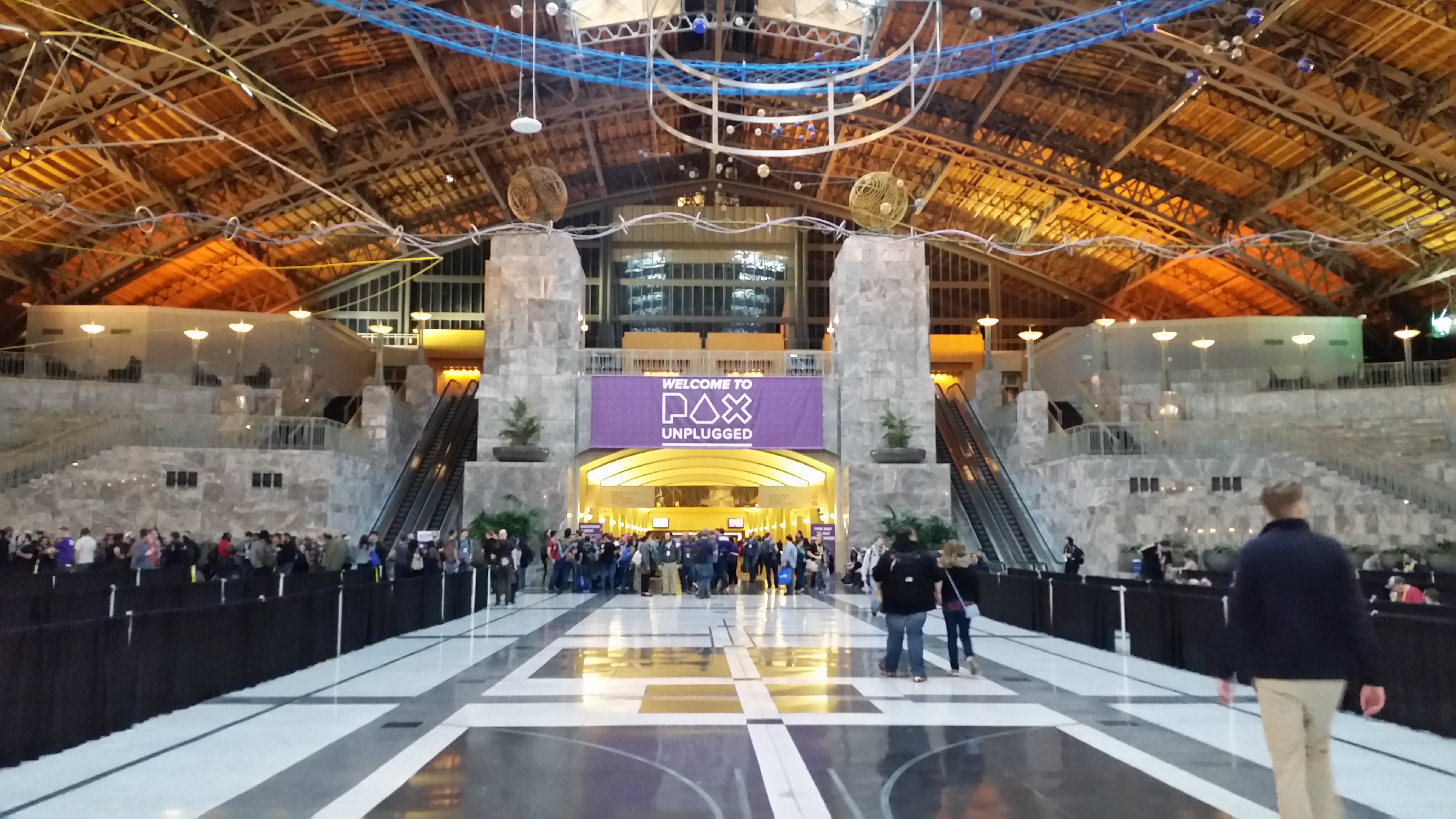
PAX Entrance

Attendees walk through the entrance to PAX Unplugged in the Pennsylvania Convention Center.

Like other PAX events in Seattle, Boston, San Antonio and Melbourne, Australia, Unplugged includes more things than you can roll a die at. Such attractions include an exhibit hall, a tabletop freeplay room with a game-borrowing library and space for hundreds of players, a “First Look” area to see brand-new games and an “Alpha Build” room to playtest indie games.

The convention has also given marginalized groups a voice with the inclusion of the “Diversity Lounge,” which this year included representatives from I Need Diverse Games, local advocate and cosplayer Jay Justice, Toronto Gaymers and mental health advocates TakeThis.org.

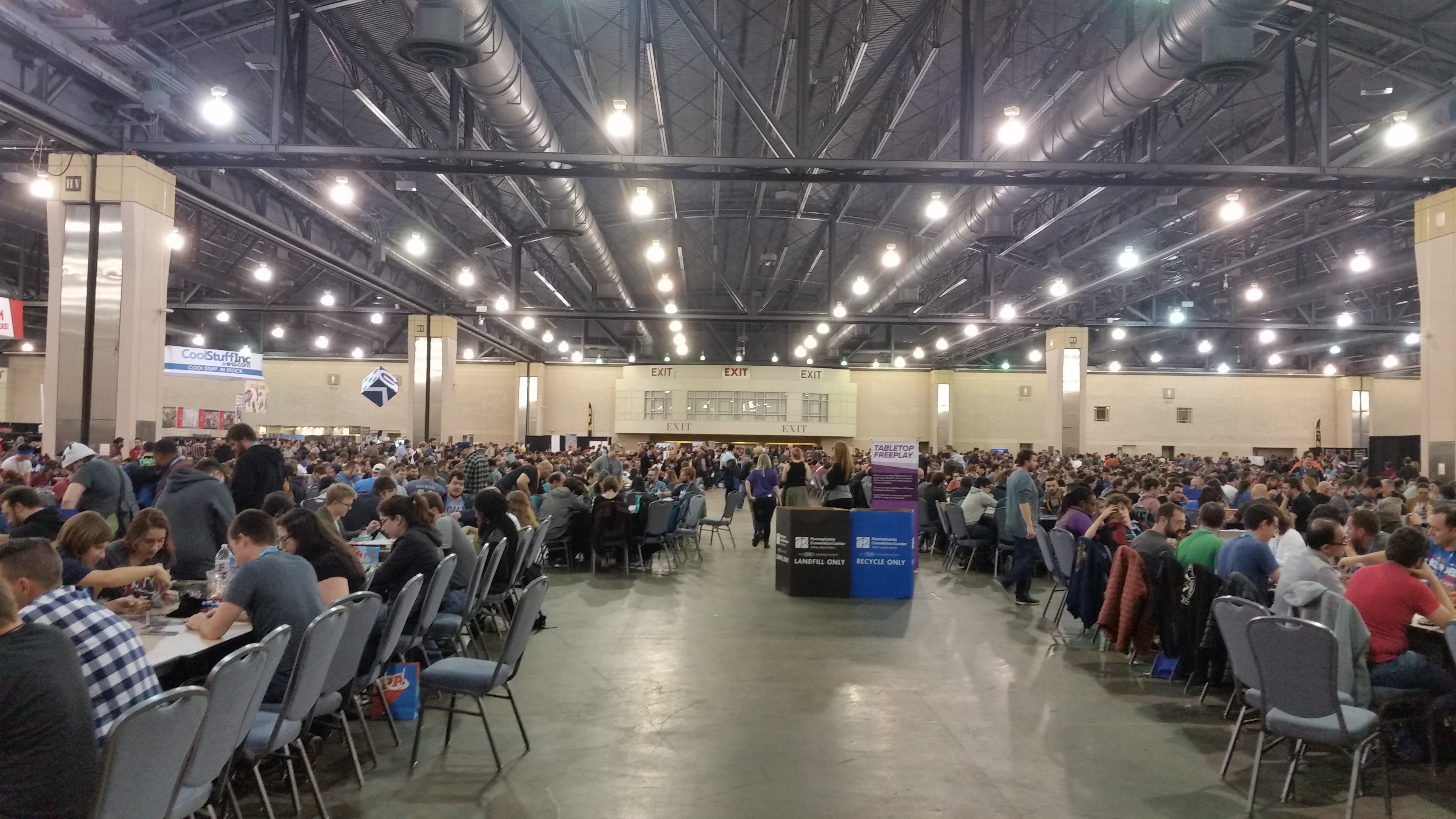
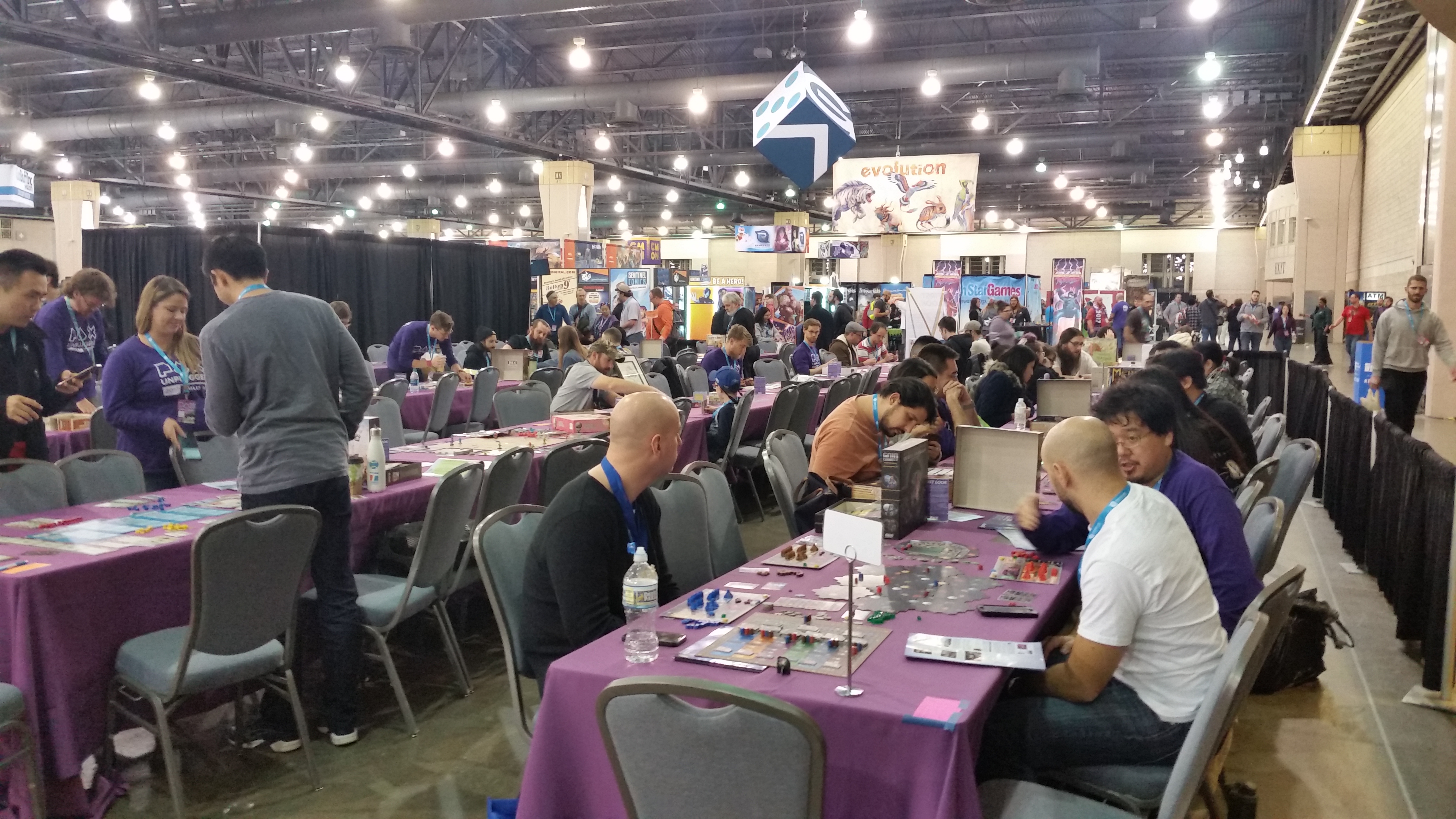
Freeplay room

Freeplay Room: Hundreds of attendees check out games from the board game library to play with their friends.

One panel discussion, “Organizing Play: The Perils and Pitfalls of Gathering Gamers,” centered around how to create spaces that make people feel welcome to play in.

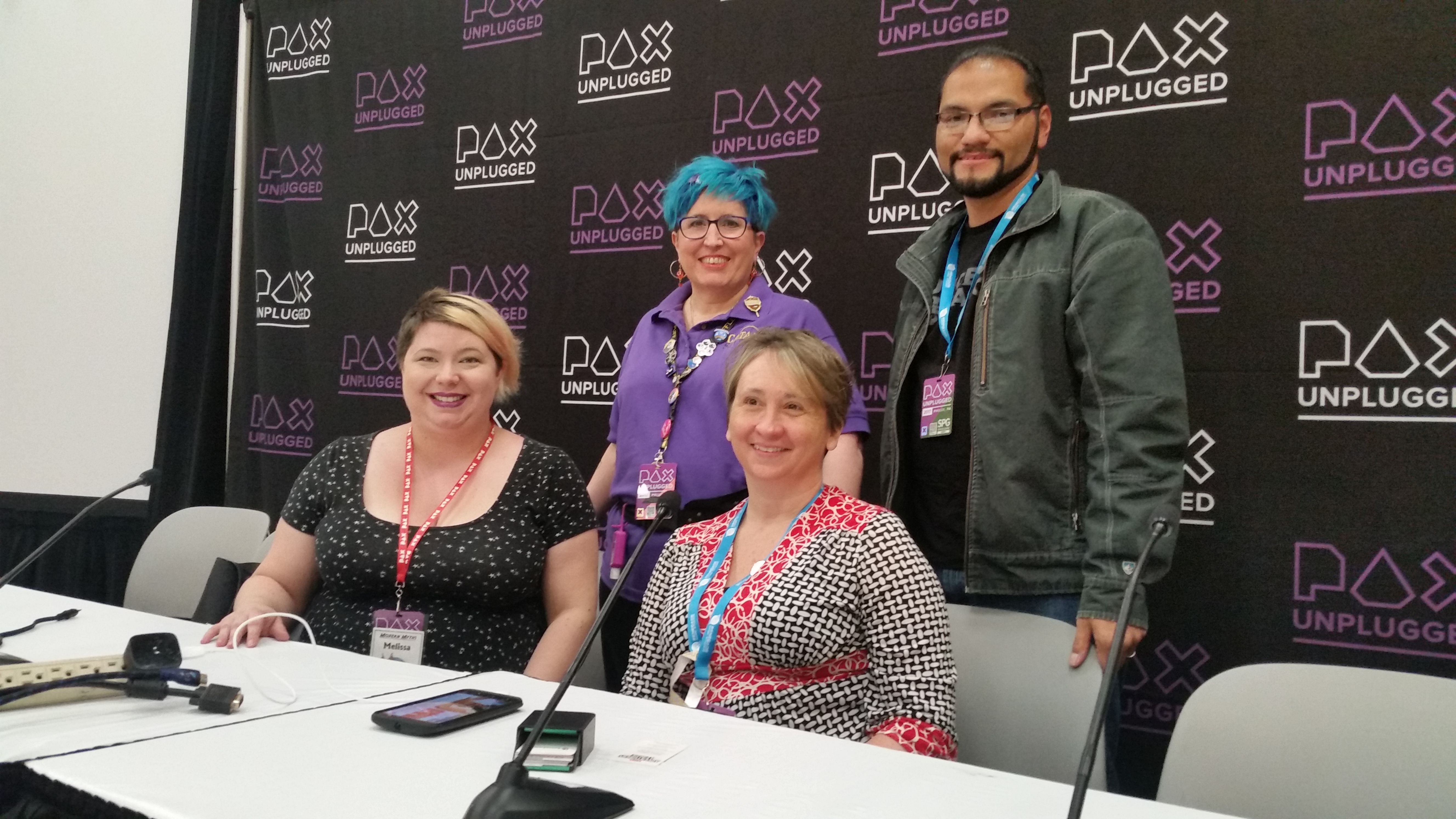
“Any good nerd who stumbles into your world, you want to trick them into staying and playing games with you,” said panel presenter Melissa Lewis-Gentry, business manager of Modern Myths in Northampton, Mass. “I will pair new people with a friendly veteran, and say ‘Here is a new person, can you take care of them?’ Be okay with losing the board game and telling them all the right strategies.”

Panel Speakers

Left to right: Panel speakers Melissa Lewis-Gentry, Donna Prior, Maury Brown and Robert Adducci pose at the end of their “Organizing Play – The Perils and Pitfalls of Gathering Gamers” panel.

Another presenter, Donna Prior, prefers to host games in a venue other than a game store, because new people can find the clientele intimidating. “Nobody wants to feel stupid,” they said. “And when trying to market to casual gamers, don’t call them ‘gamers.’ There’s a certain perspective on what gamers are.”

Prior is the organized play coordinator of Catan Studio, as well as founder and executive director of OrcaCon, an inclusive tabletop convention in Bellevue, Wash., that takes place each January. OrcaCon is going on its third year, and the new theme puts indigenous American game designers at the forefront. They first got involved with gaming through Dungeons & Dragons in the ’80s, and then Magic: The Gathering in the ’90s. Now they travel throughout North America and the UK to teach the game Settlers of Catan and host business meetings in Germany with the game’s creator and the rest of the team.

First Look games

Gamers check out the selection of brand new, never-before-seen board games.

“Unplugged has got some of the same cool things about a regular PAX, it’s really more like comparing this to Gen Con (in Indianapolis), which is another tabletop convention,” Prior said. “The only thing that’s really different about this one is that the games are not video games. But it reminds me of the best parts of big tabletop shows, they’re some of the best things I like about PAX.” According to Prior, Unplugged is also inclusive for attendees with physical disabilities, with helpful features like wide aisles, flat ground and legible signs with large fonts.

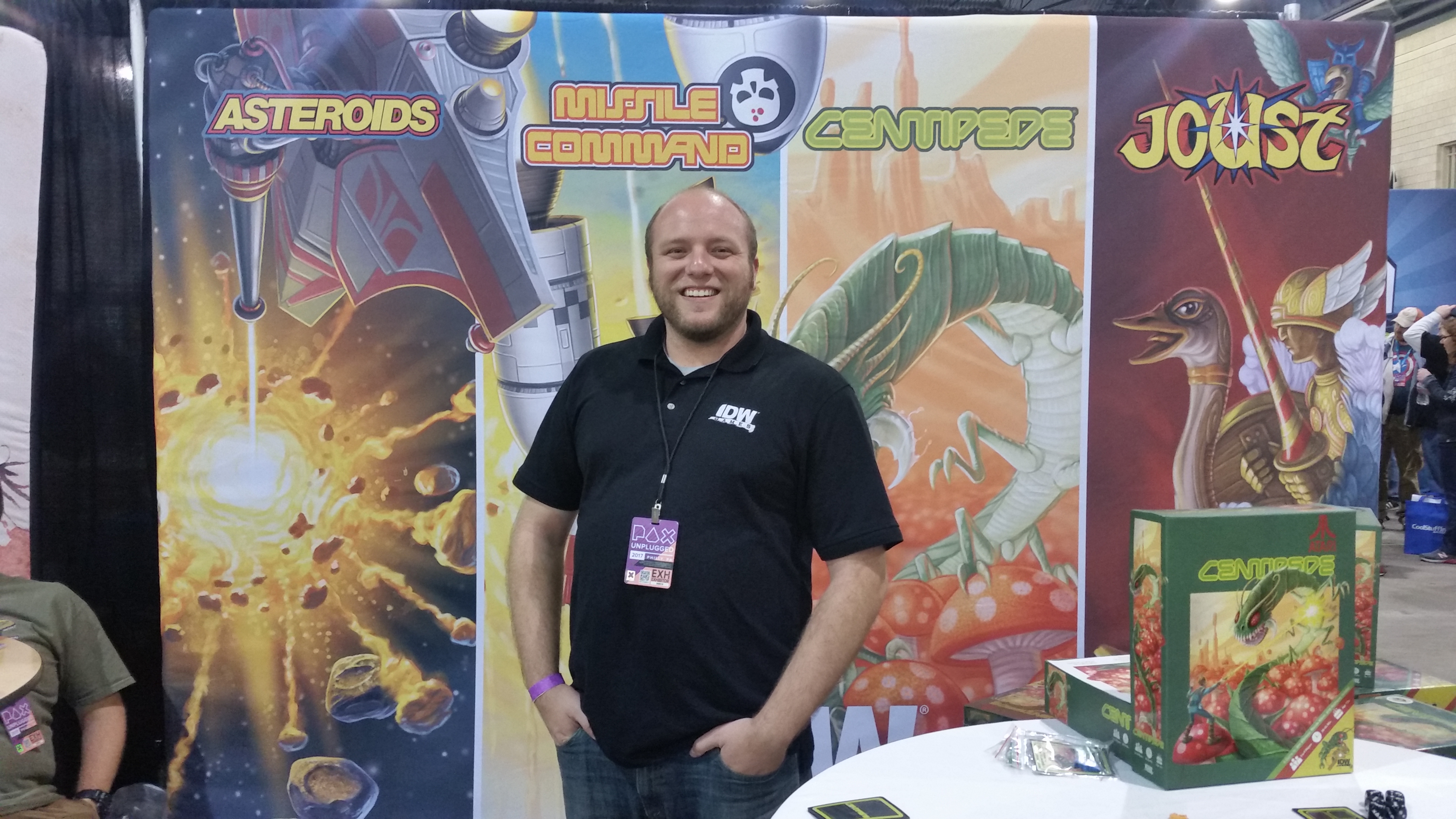
Nearby in the exhibit hall, IDW Games set up a display featuring the recently-produced Centipede, the first in a line of IDW board games created in a partnership with classic video game company Atari and made by local Philly designers Anthony Amato and Nicole Kline of Cardboard Fortress Games.

Ross Thompson

Ross Thompson of IDW Games and Kingdom-Con stands by the newly-released Centipede board game made in a partnership with Atari and local Philly game designers Anthony Amato and Nicole Kline of Cardboard Fortress Games.

Ross Thompson is the Games, Marketing and Events Manager with IDW Games and the founder of Kingdom-Con in San Diego, and he runs a circuit of 20 conventions a year. “I would say that PAX in general does a very good job of creating a culture of people that want to learn games,” he said. “So when you go to a show like Gen Con, or Origins (in Columbus), which are other game industry hardcore cons, those gamers have a very set way of games they play. They’re not as open to trying out now games, where PAX has a very good culture of a gaming group coming up and just diving in.”

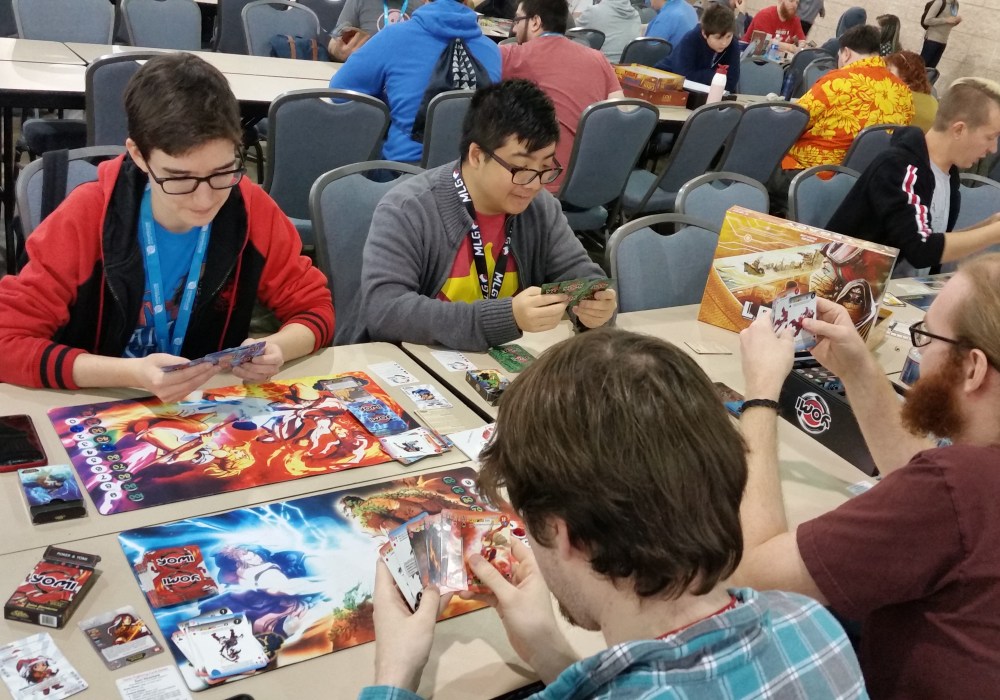
Attendee Carolyn Scullington sat at a table playing two-player matches of the card game Yomi with her husband Dan and friends TJ Ngo and Chris Copel-Kosciesza. Originally from Connecticut, Scullington now lives in New York City. She enjoyed the freeplay area of the convention the most, but the people are what bring her back to the PAX scene.

“I think that PAX in general has a really good community, and I definitely still feel that here,” she said. “That’s part of the reason why I’m the person who’s refreshing Twitter to find out when the badges go on sale for PAX East (in Boston), because it feels like a very welcoming environment. Which I feel like especially for gaming conventions, it does sometimes feel like there’s very ‘us versus them’ dynamics within the gaming community, and we don’t have that at all here. It was really awesome to walk right down the big stretch on day one and see the gender-neutral bathrooms, for instance.”

Enforcer HunchPunch

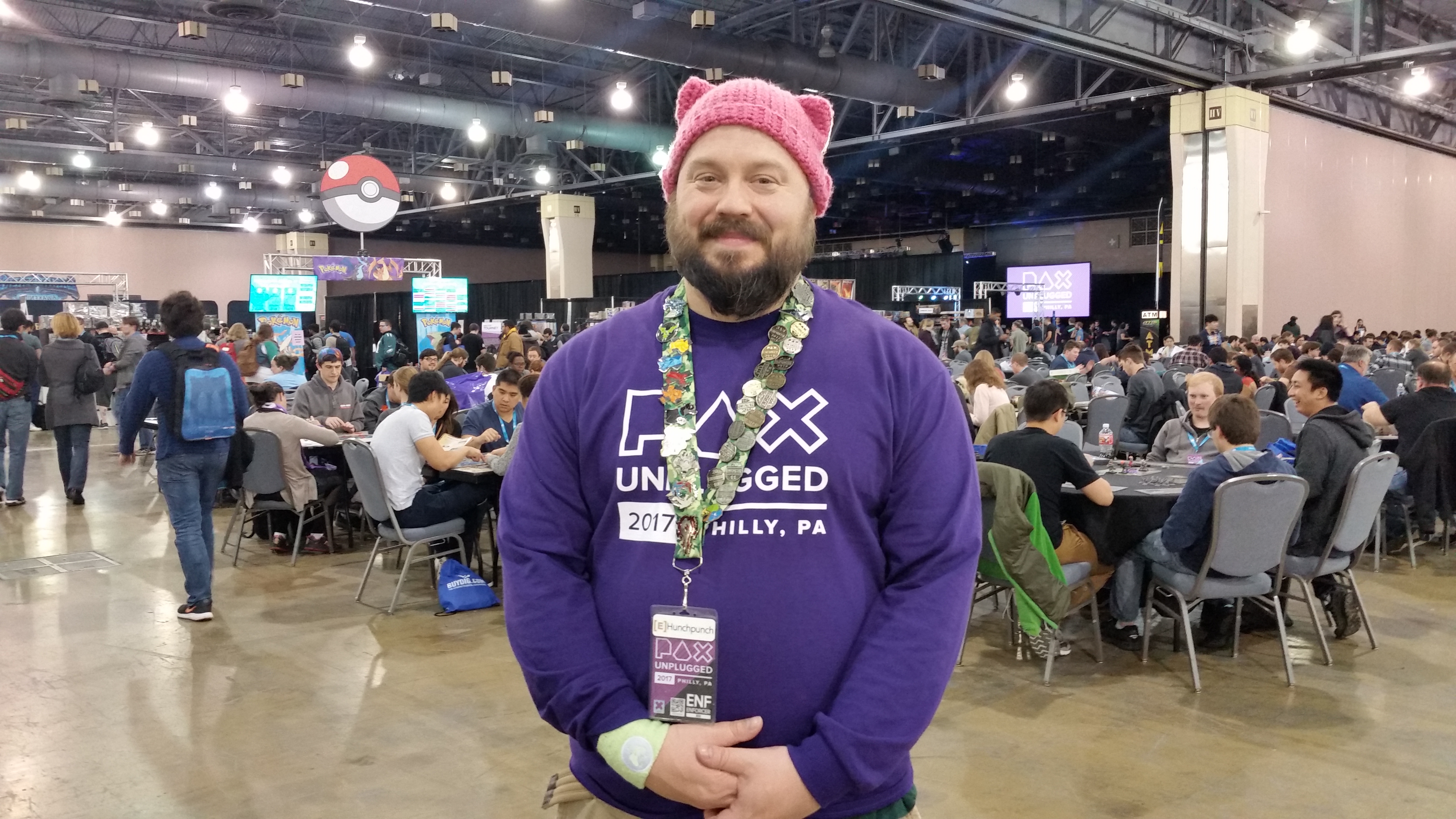
“HunchPunch” works his fifth year as a PAX Enforcer at PAX Unplugged, offering services like answering questions and leading the way.

PAX expos are staffed by a crew of “Enforcers” who are recruited to answer questions, direct guests to different locations and resolve conflicts. They started out as volunteers, but are now paid employees. One Enforcer, HunchPunch, started in Seattle in 2009 and has worked at every single PAX at least once.

“I’m just continuing the tradition of helping out, being a part, doing what I can,” he said. “I attended back sometime ago for the first time, went a couple times, and then decided to apply. It’s real simple, it’s a matter of making the event happen in the same way or have the same feel from whenever I attended for those attending for the first time.”

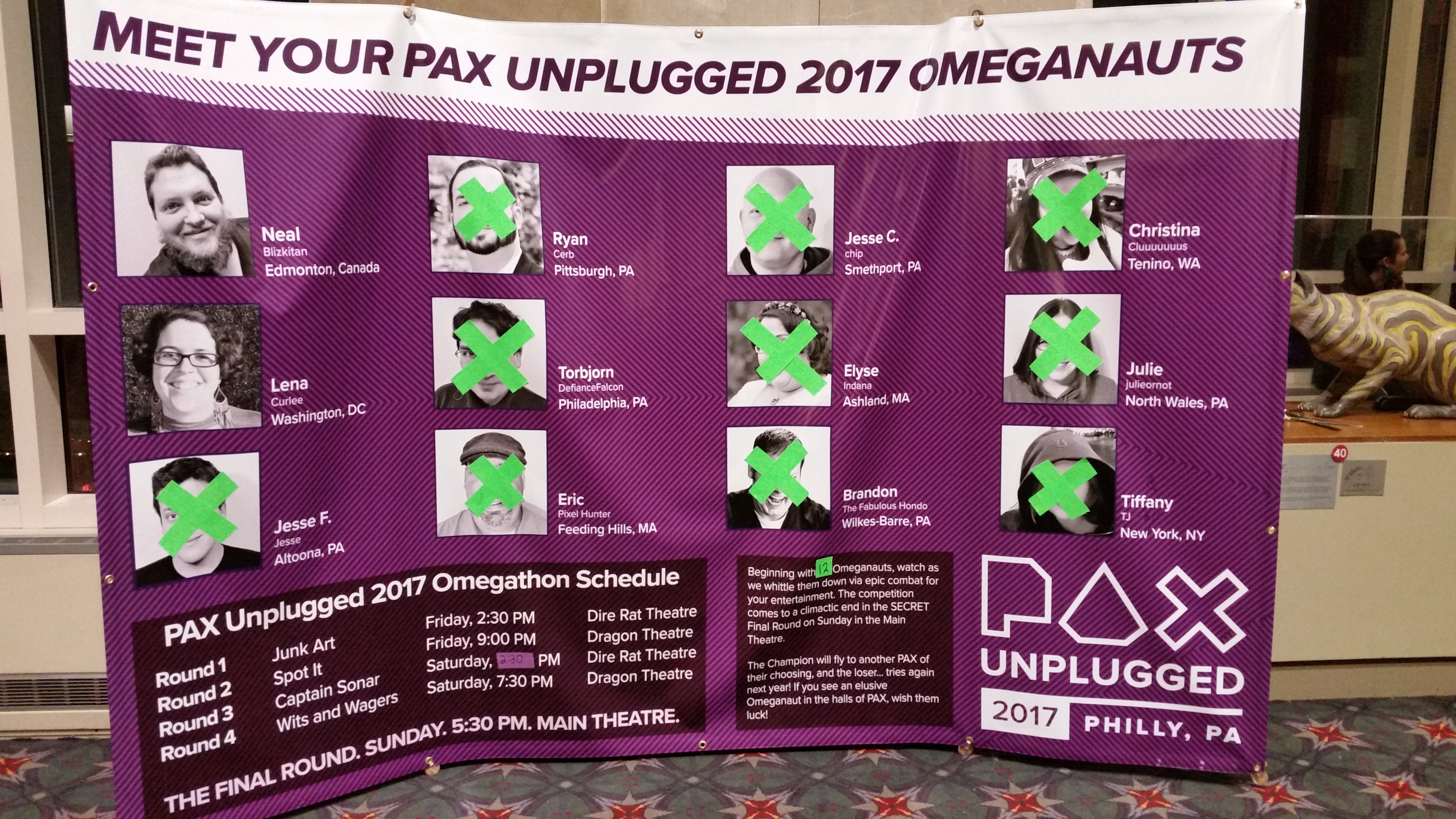
Omeganauts

Omeganauts are randomly chosen attendees who face off in game challenges to win a prize. Finalists “Curlee” Lena and “Blizkitan” Neal compete in Battleship on the main theatre stage. Lena won.

Like all other PAX’s, this event is sure to get exponentially larger as more people hear about it.  If you’re a local game designer or nerdy creator and would like to set up a table next year, or you’d just like more information on the convention and want to purchase tickets, visit this site.

Culture Abuse plays Union Transfer, talks tours and Philly food

Culture Abuse made their way from sunny Northern California to the city of brotherly love for the third time to play a show at Union Transfer on Tuesday, Nov. 7. Self-described ”kinda grunge, kinda punk, kinda hardcore” band played with SoCal bands Wavves and Joyce Manor on this tour.

Band members include vocalist David Kelling, bassist Shane Plitt, guitarist Nick Bruder and guitarist Junebug. Drummer Ross Traver played with them on this tour. They formed as a group four years ago, and have since gone from playing small coffee shops and living in a San Francisco practice space to performing at SXSW in Austin in 2016 and at this year’s Riot Fest in Chicago, on the same bill as headliners Nine Inch Nails and Jawbreaker.

riotfest

Culture Abuse playing Riot Fest in Chicago on Sept. 17. Photo by @heartsigh_s via Twitter

“The original intent was to play music because we all wanted to play music,” bassist Plitt said in the green room backstage. When asked how they rose to fame, he answered: “I think because none of us are bad people.”

Culture Abuse has three releases to date: their first EP The Day Dreams of Nothing, 7-inch release Spray Paint the Dog, and breakout 2016 LP Peach were all released via 6131 Records. In June, they signed to Epitaph Records in Hollywood.

Peach

Culture Abuse’s latest 2016 release Peach

The band tours regularly throughout the U.S. and Canada. On earlier trips to Philly, they shared a stage with Night Sins at Ortlieb’s in June 2016 and then later with Philly-based Nothing, and Citizen from Run for Cover Records at Union Transfer in July of this year.

The touring life can be hard for some, but Culture Abuse members have embraced it.

“(I like) getting to hang out with friends I can’t hang out with any more, getting to meet new friends that I never thought I would ever have, and getting to play music for 30 minutes every night,” Plitt said. “That’s the best part of touring.”

“We get to play music, and it’s music I actually like,” said guitarist Bruder. “It’s fun, it’s sick. I dunno. It’s just, I love music and I’m having a great time on tour.” This year, they’ve been on the road for four months, but tour length can always vary. “There’s always been a thing in the back of my mind where like, ‘Oh shit, what if my living situation falls through, what if this happens, what if that happens,’” he said. “But I dunno, there’s something cool about just hanging on tight and going for the ride – whatever happens, happens. I mean like, anything can happen at any time anyway, so you might as well like be doing something you love and care about, you know?”

cultureabusefl

Culture Abuse playing at Ponte Vedra Concert Hall in FL on Nov. 3. Photo by @james_hourican via Instagram

When things get tough, just keep going. “Battle through the hard parts, have fun, play good, take it somewhat seriously but also like have fun and don’t be afraid to just like, accept everything that happens because in the end you’ll have a bunch of stories and a bunch of memories to pull from, y’know,” Bruder said. “One of my friends, he said he can justify anything on tour by just saying ‘making memories.’ So you can look back at the shitty, ‘Aww man, we had the worst night on the tour,’ and ‘We made no money, we only played for the people that work at the venue.” At the end of the day, it’s ‘You know, I’m really glad I did that, I still have the memory, I have the story, it’s fun.’”

Guitarist Junebug is the only member not born in California, and he moved to San Francisco from Boston in 2010. “The friends that I knew (in SF), they were like ‘You should move here,’ and I said ‘Okay, sure, that sounds great,’ so I did. It was hard, but I did it. And I haven’t asked anybody for anything, you know? Like, people, sometimes they move out for the first time, like ‘I need 300 dollars, mom can you help me out?’ I moved out of my mom’s house, lived on my own for like 6 years and then I moved across the entire country to California. I never went back again.”

With rising popularity comes overseas tours, and so far they’ve they played in Amsterdam, the Netherlands, Belgium and Italy. “I guess my favorite part would be literally being lost and not knowing anything at all about where I’m at,” Junebug said. “I’ve been across the United States, plenty of times with bands I was in before, just traveling in general, so doing a Culture Abuse tour is like ‘Yeah, I’ve been across the United States, I’ve been to all these states.’ But going to Europe, which I’ve never been to before, going to the UK and going to all these countries where they don’t even speak English, it’s like, who would do that? It’s crazy.”

With all the travel they do, it’s inevitable they’ll settle on favorite restaurants for each stop they make. The band’s favorite local Philly food spots are John’s Roast Pork on E. Snyder Avenue and Spice C on N. 10th Street. “(Spice C) is like a Chinese restaurant that Nick from Nothing was like ‘Yo, you have to go to this spot, because it will set you straight,’ as he said, because we were all hungover,” Plitt said. “Some shit happened. Great Chinese food place, great soup.”

Pat’s is not among their highest-rated stops. “We’ve been to Pat’s Cheesesteaks literally like four times, being here and coming here, but, I’m not gonna talk shit, but Pat’s, it’s like touristy,” Junebug said. “I don’t know much about Philly. The only thing I know about Philly is ECW (Extreme Championship Wrestling) was here, the wrestling promotion, and they were very popular, so my favorite thing about Philly would be ECW.”

For some, being in a band is a hobby, and for others it’s a lifestyle. “It’s the only job I’m probably not going to get fired from, because all my other jobs I’ve been fired from,” Plitt said.

https://youtu.be/-3Lva3SxMe4

To hear their music, visit https://cultureabuse.bandcamp.com. For more info, go to http://cultureabuse-uncensored.com.

Indie Arcade Showcase Brings Crowd to Colorspace

As seen on Geekadelphia

First Fridays are a chance for everyone to go out into the city and see the new works at the forefront of the art world. Usually, viewers see traditional mediums such as paintings and digital art on display, and occasionally a sculpture. November’s offering brought something different to the table – an independent game developer night.

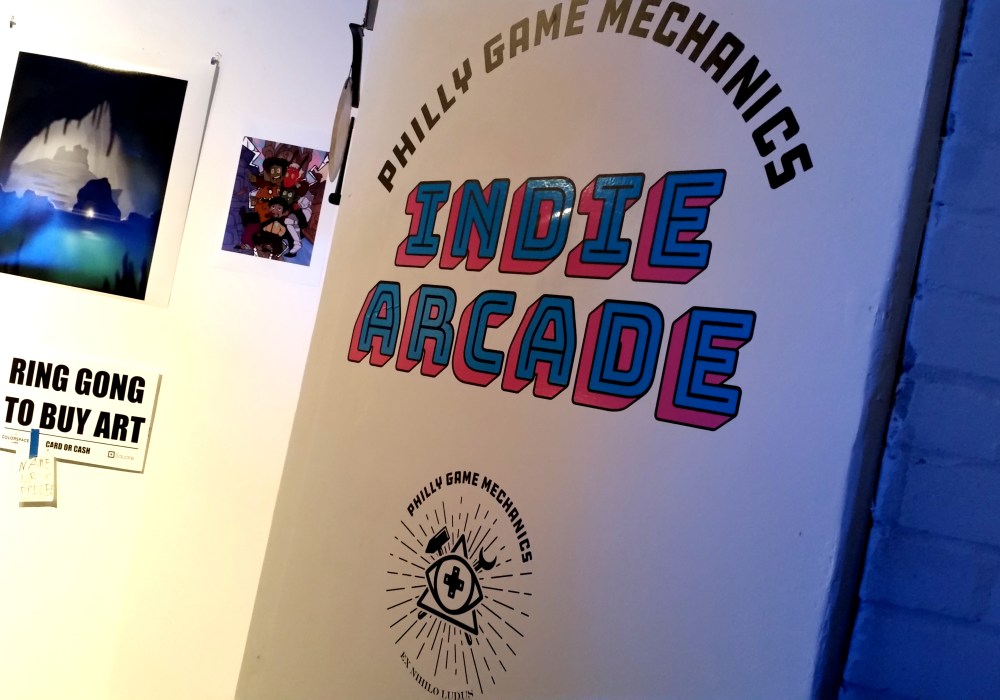
Colorspace Labs in Kensington, Philadelphia, normally a photo/video studio and coworking office, hosted the Indie Arcade on Friday the 3rd. From 6 to 11 p.m., hundreds of excited patrons browsed the showcase of games by developers from the Philly Game Mechanics and lined up for free beer and snacks while next-door neighbors Do It Now T-shirts were showing off their screenprinting setup, DJ Phonographiq provided the tunes and a projector displayed abstract clips on the wall outside.

Players

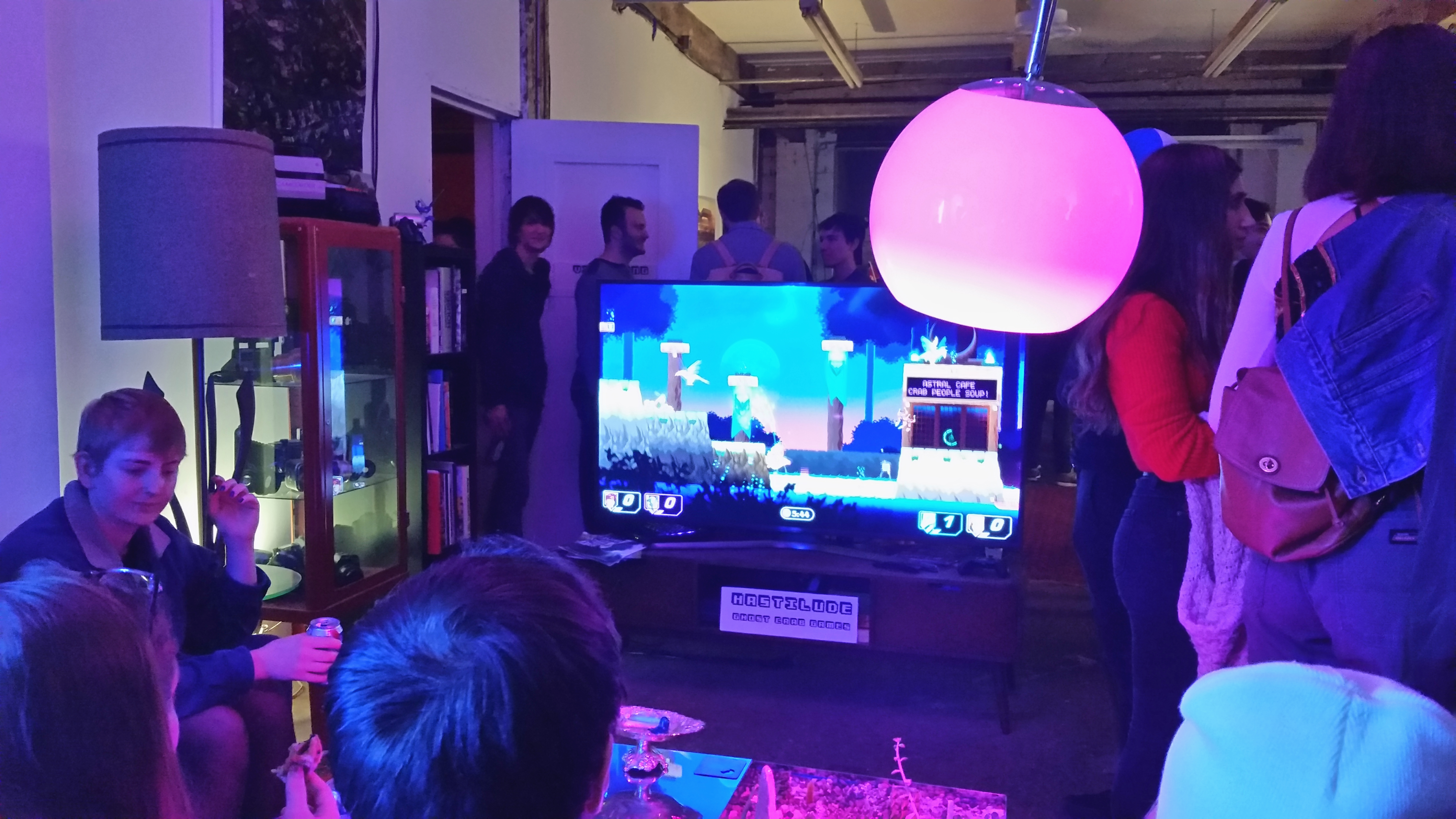
Several players gather on a couch to play the beat-’em-up game Hastilude.

Independent developers showcased their games The Come Up, Hastilude, Vive Pong, Sole, Disco Ships and Why Are We Running?, ranging in genre from virtual reality adventures to beat-’em-ups and rhythm-based action, each set up at a different station in the room. In addition, various game-related prints were hung on the wall.

The game Disco Ships features frenzied multiplayer mayhem in space, wherein players choose their weapons and fly around the screen trying to shoot and trap others in environmental hazards. The work is reminiscent of Gradius but gameplay remains on the same screen rather than side-scrolling. Creator Brian Palladino worked on the game in his free time, but finished it up for a school project at Philadelphia University before he graduated in 2015.

“I’ve always been a fan of couch multiplayer games, so that influenced my direction a lot on Disco Ships,” Palladino wrote in an email interview. “Otherwise, it all started from wanting to create and actually finish a game. I’d worked on a few scratch projects to get the feel for programming, and working in Unity and settled on something smaller to keep my scope down.” Palladino first discovered Philly Game Mechanics from his university professor, who invited the students to visit. Nearly two years later, he came back with his own game to show off and he’s been attending ever since.

Philly Game Mechanics meet up twice a month to do a “game jam” that starts on the first Thursday and ends on the third to develop new games. They also run Philly Game Jam and Global Game Jam events that run for 24 or 48 hours, in addition to tournaments and non-competitive game nights. They’ve hosted for almost six years now, but this event was their largest one yet.

Stephen Pettit of Get Warmer Games is responsible for bringing the developers together for First Friday. He met Colorspace owner Charles Cerrone in college. “We lived across the hall from each other in freshman year and we really bonded over bikes and being goofballs and stuff,” Pettit said. “I started helping out around the local indie game scene, and Shan (Charles) has been running these First Friday gallery events out of this space for a couple months, and I was like, I have all these people who need an audience!”

No experience is needed to come to Philly Game Mechanics events. “You don’t even have to play games,” Pettit said. “We have members from all art forms and disciplines. Personally I don’t think anyone is an aspiring game developer, people start making games as children so everyone is already more than qualified.”

N64Controllers

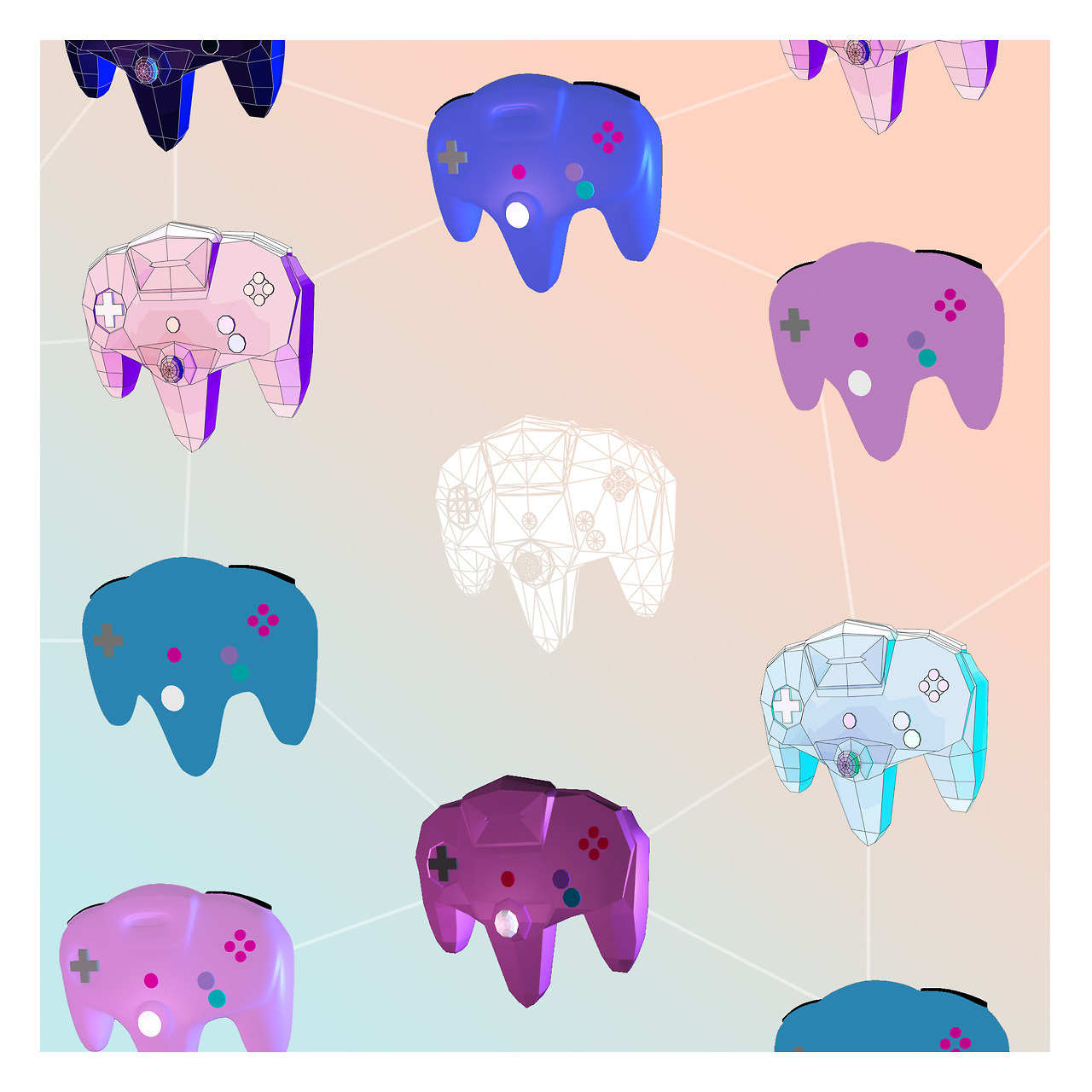
Rachel L. Stine’s print on display at Colorspace on First Friday. Nintendo 64 game controller design made in Autodesk Maya and Photoshop.

Rachel L. Stine is a game designer and also one of the artists who contributed game-related art pieces to display on the wall during the event. She started going to PGM meetups several years ago, back when it was simply called Philly Dev Night.

“I was in school for game design and wanted to get out of the college bubble I had been in, and just really immediately loved the crowd there and everyone’s willingness to just make small experimental projects together and collaborate,” she wrote in a Facebook interview. “I always tell people I got into game design by accident, which is mostly true. As a high school student touring Drexel I got lost on the fashion design tour and ended up in the digital media department, and they won me over. But even before that, I’ve always been an artist and a maker, and I’ve been inseparable from a computer since a very young age, so intersections of art and technology have just always been something I’m drawn to.”

For Stine, it’s part hobby, part career. “I do some contract work in games and animation and sell my own work,” she wrote. “But I also split that time with another job outside the arts field, which I find is a fulfilling way to keep doing the weird small projects I want to do while maintaining some stability in my life.”

For the art show, she wanted to make a game-related print that didn’t belong to a specific game or series. “I’ve honestly just been fascinated by the Nintendo 64 controller for a long time,” she wrote. “There’s a pretty strong consensus that it’s terribly designed, but because it’s iconic and the Nintendo 64 is such a beloved system, everyone just has this affection for it anyway, and I love that. I made the piece by 3D modeling a controller in Autodesk Maya, rendering different versions — low-poly blocky ones, smooth reflective ones, et cetera — and then arranging them and adding details in Photoshop.”

charles

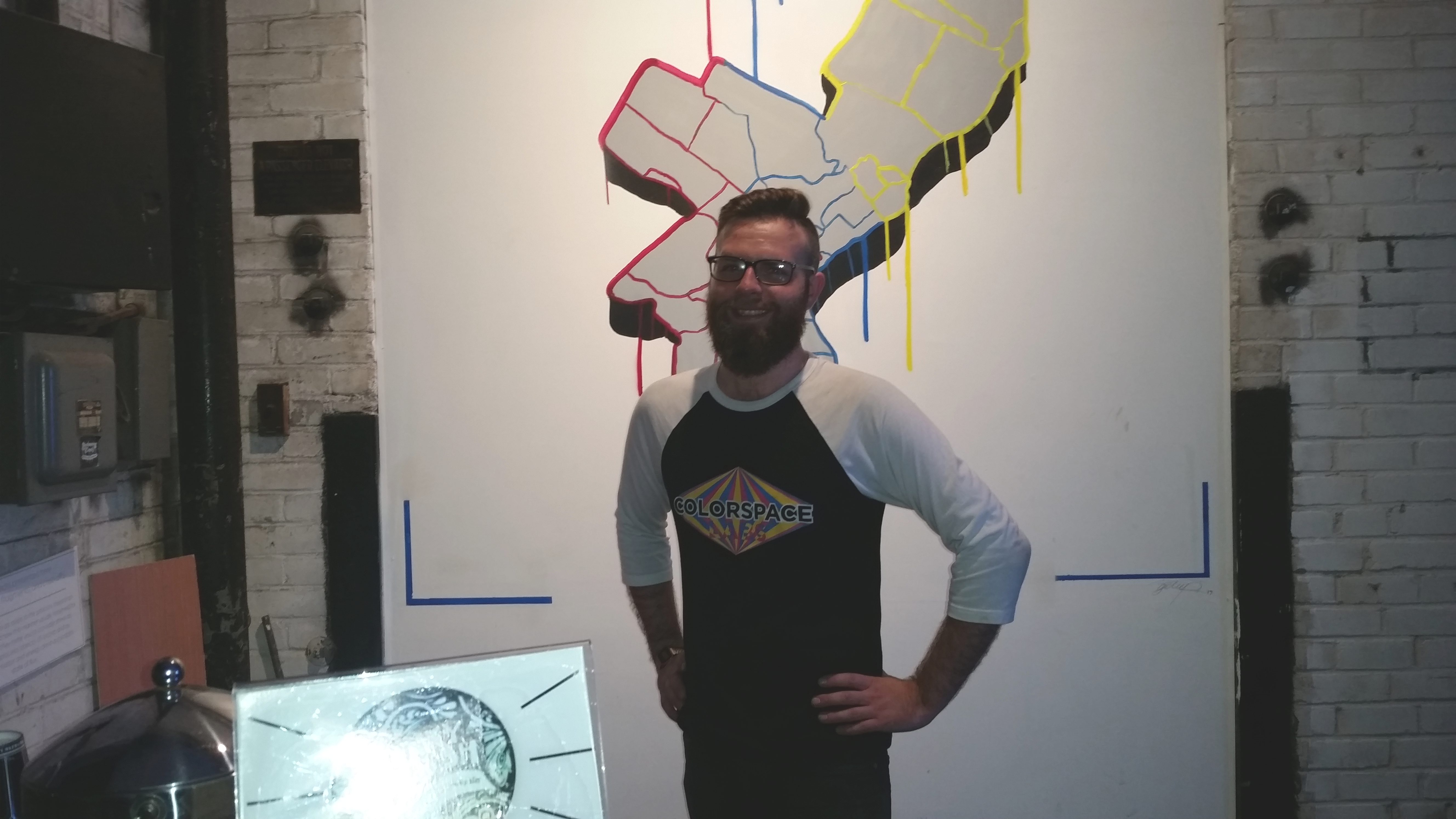
Charles “Shan” Cerrone of Colorspace Labs poses during the First Friday Indie Arcade.

Colorspace owner and JUMP Philly photo editor Charles Cerrone has worked with co-owner Mike Colosimo since 2010. They began as a photo and video production company, moved into their first studio in 2014, and expanded to their current location in the summer of 2016.

“We’re not up here to sell, to make money off of this, we’re here because we want to let our resources be a cost-effective way for young artists, independent artists, different kinds of artists, to be able to tell their story, do their art, make their work happen,” Cerrone said. “And that’s so that’s why we curated this space together, to be somewhere that people can come to work. But every First Friday we bring together this community of people, and it’s always something different, sometimes it’s photography, sometimes it’s graphic design, sometimes it’s screenprinting. Tonight it’s video games, it’s 3D art, it’s all these amazing things that you might not think are going on in Philly, but they are, and we want these people to have a platform.”

Red Bull sponsored the event by providing monitors to run the games off of, and Pabst Blue Ribbon, Faber vodka and Funky Fresh kombucha provided the open bar.


The next PGM event is the Iron Chef Jam 3, 7 – 10 p.m. on Thursday, Nov. 16. It will be held at Indy Hall, 399 Market St., Suite 360. Instead of video games, developers have to make analog games that can be created out of provided materials.

The Philly Game Mechanics are a 501c3 non-profit with help from Philadelphia Culture Trust. They are always looking for sponsors and donors. For more information, visit the Philly Game Mechanics website or donate to their Patreon.

For next month’s First Friday on Dec. 1st, Colorspace will feature the works of Philadelphia designer Nick Cassway. The details are currently unrevealed, but they will turn the entire gallery into a blacklight room. In the future, they hope to host another indie arcade in the springtime. Find out more info about the venue here.